Founder Playbook
We send prototypes, not proposals
 Ratik4 min read
Before a discovery call or a scope document, we build you a working prototype. Your products, your branding, on your phone. Here’s why.
The Prototype Arrives First
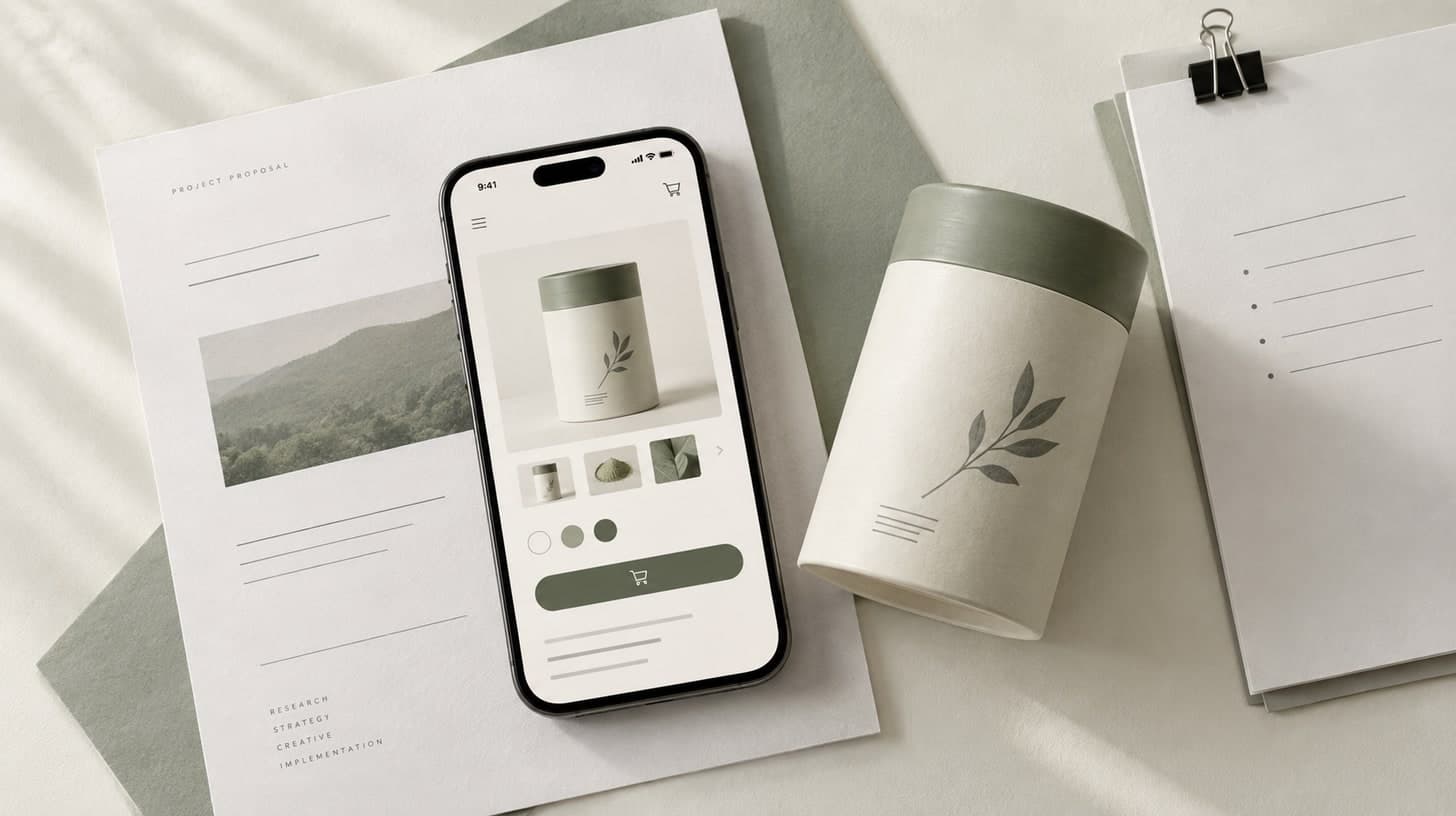
Before you have signed anything, before a discovery call, before a scope document exists, we build you a working prototype. Your real products, your actual branding, running on your phone. You can swipe through it, tap on items, and see what your storefront or mobile app could look like with your own catalog loaded in.
We send it alongside a short note explaining what we noticed about your current platform and what we think could improve. No pitch deck. No capabilities overview. No “about us” section. Just a working thing you can hold in your hand and evaluate.
This is not how most agencies operate, and there is a reason we do it this way.
Why Prototypes Beat Pitch Decks
A pitch deck describes what an agency plans to build. A prototype shows what they have already built. One is a promise. The other is evidence you can hold in your hand.
When a founder swipes through a prototype on their phone and sees their own products displayed in a storefront we designed for their specific business, they learn more in sixty seconds than they would in an hour-long capabilities presentation. They can see whether we understand their brand. They can see whether the design choices match how their customers shop. They can see whether we made thoughtful decisions about navigation, product display, and checkout flow, or whether we applied a generic template.
Pitch decks hide the gap between what an agency says it can do and what it actually delivers. Prototypes expose that gap immediately. For teams that are good at the work, that exposure is an advantage.
How We Build Them
We spend two to three days building each prototype. The process starts with research. We look at the founder’s current platform, their product catalog, their competitor landscape, and how their customers likely discover and purchase products.
Then we build. Usually the output is a storefront designed around their specific product category. Sometimes it is a mobile app preview for brands with strong repeat-purchase dynamics. We pull real product images and descriptions from their current site, apply a design direction that fits their brand, and build a functional frontend that runs in a browser on any device.
The prototype is not a mockup or a Figma file. It runs on a real URL. You can open it on your phone, share it with your team, and interact with it like you would a real product. We use the same tools and frameworks we would use for the actual build, which means the prototype represents the real quality of our work, not an idealized version of it.
What It Filters For
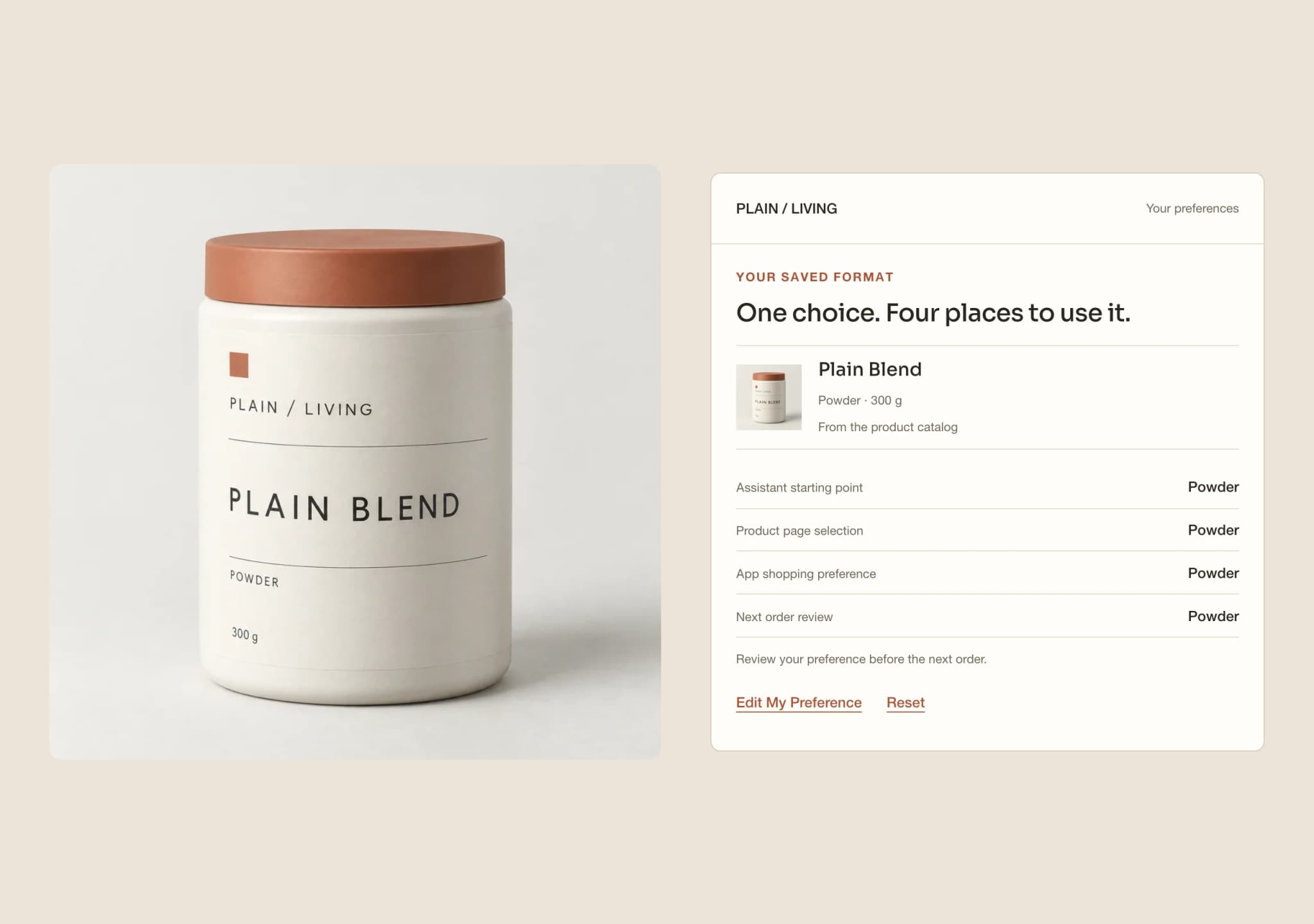
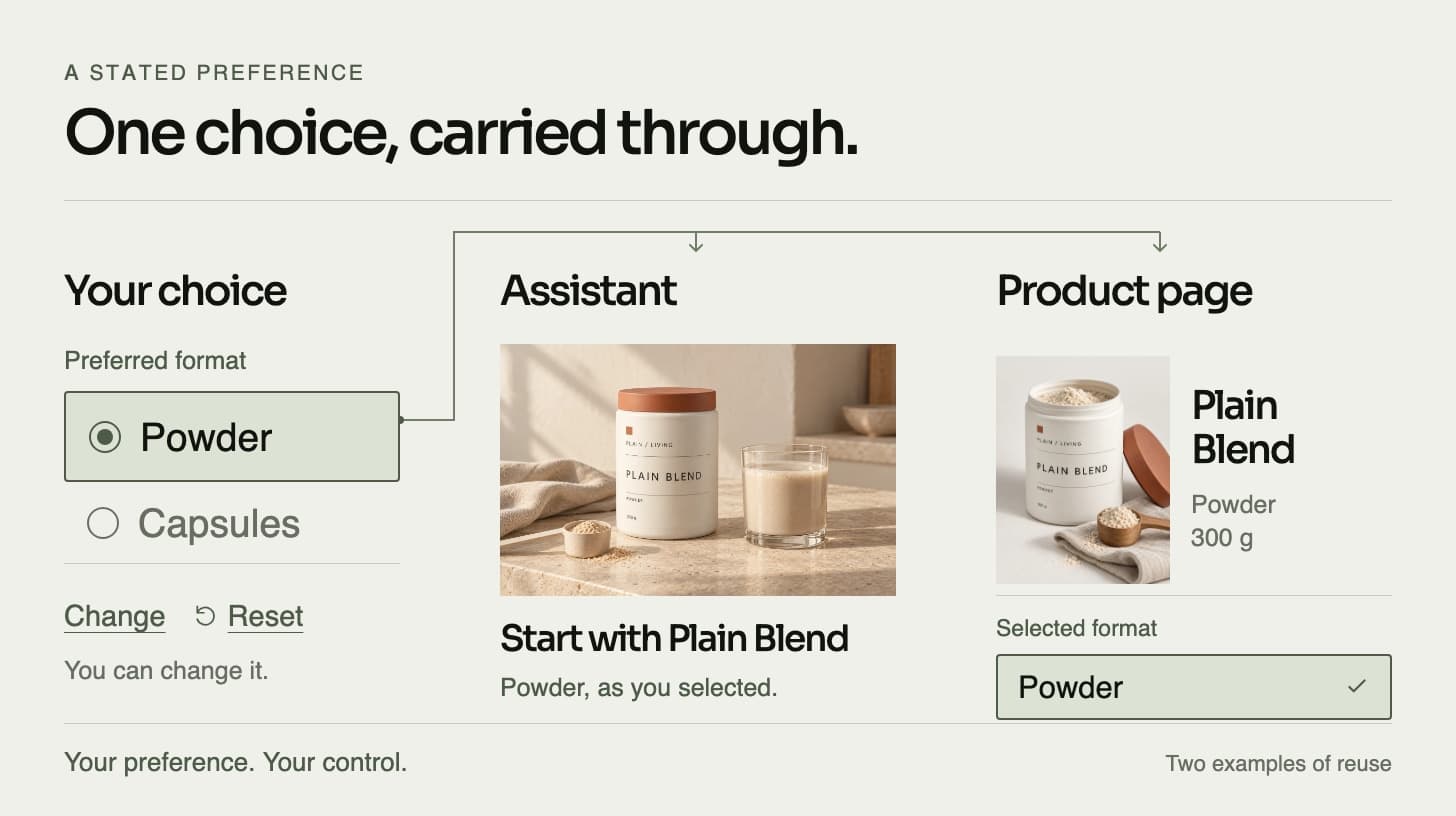
The Preference Loop is a focused example of that review. Save one format choice and follow it into an assistant, product page, app shopping preference and next-order review. Then edit, discard or reset it. The behavior runs locally and clears on reload; it does not place an order or connect customer systems. The prototype makes those state changes inspectable, while production persistence and integrations remain a separate scope.
This approach is expensive per lead. Two to three days of founder time for a single prospect is dramatically more costly than sending a hundred cold emails with a generic audit attached. We accept that tradeoff because the founders who respond to a prototype are the founders we work best with.
A prototype self-selects for people who care about their product, who respond to craftsmanship, and who make decisions based on evidence rather than sales presentations. These founders tend to have clear opinions about their business, high standards for the people they work with, and the ability to move quickly when they see something that works. These are the qualities that make a project successful.
The founders who do not respond to a prototype are also providing useful information. If a working demo of their future storefront does not generate interest, the timing is not right, or we are not the right fit for their business. That is better to learn before a project starts than three months into one.
The Economics
We invest two to three days of work per lead. At our billing rates, that investment is substantial. But the close rate on prototype-led outreach is significantly higher than on any other approach we have tried.
More importantly, the projects that start from a prototype almost never have scope disagreements. Both sides have already seen what the finished product could look like. The conversation about scope, timeline, and budget starts from a shared understanding of the end result rather than from an abstract description in a proposal document.
Traditional proposals describe scope in words, and those words inevitably mean something different to the client than they mean to the team building the product. That gap between interpretation and expectation is where most project disputes originate. A prototype closes that gap before the project begins.
We accept fewer projects per quarter than a traditional agency because we spend more time per lead. The projects we do take start faster, run smoother, and end with a product that matches what the founder expected when they hired us.
What would this look like for your brand?
Talk directly with a founder about one customer journey, the systems behind it and a focused prototype using your approved products and content.