Builds
How DryEye Rescue turned a Shopify store into a clinical brand

A Supplement Store That Needed to Be a Clinic
DryEye Rescue sells products for people with chronic dry eye disease. Their customer isn't impulse-buying a wellness supplement. They're managing a medical condition, often on the recommendation of their ophthalmologist, and they need to reorder every 30 to 60 days for the rest of their life.
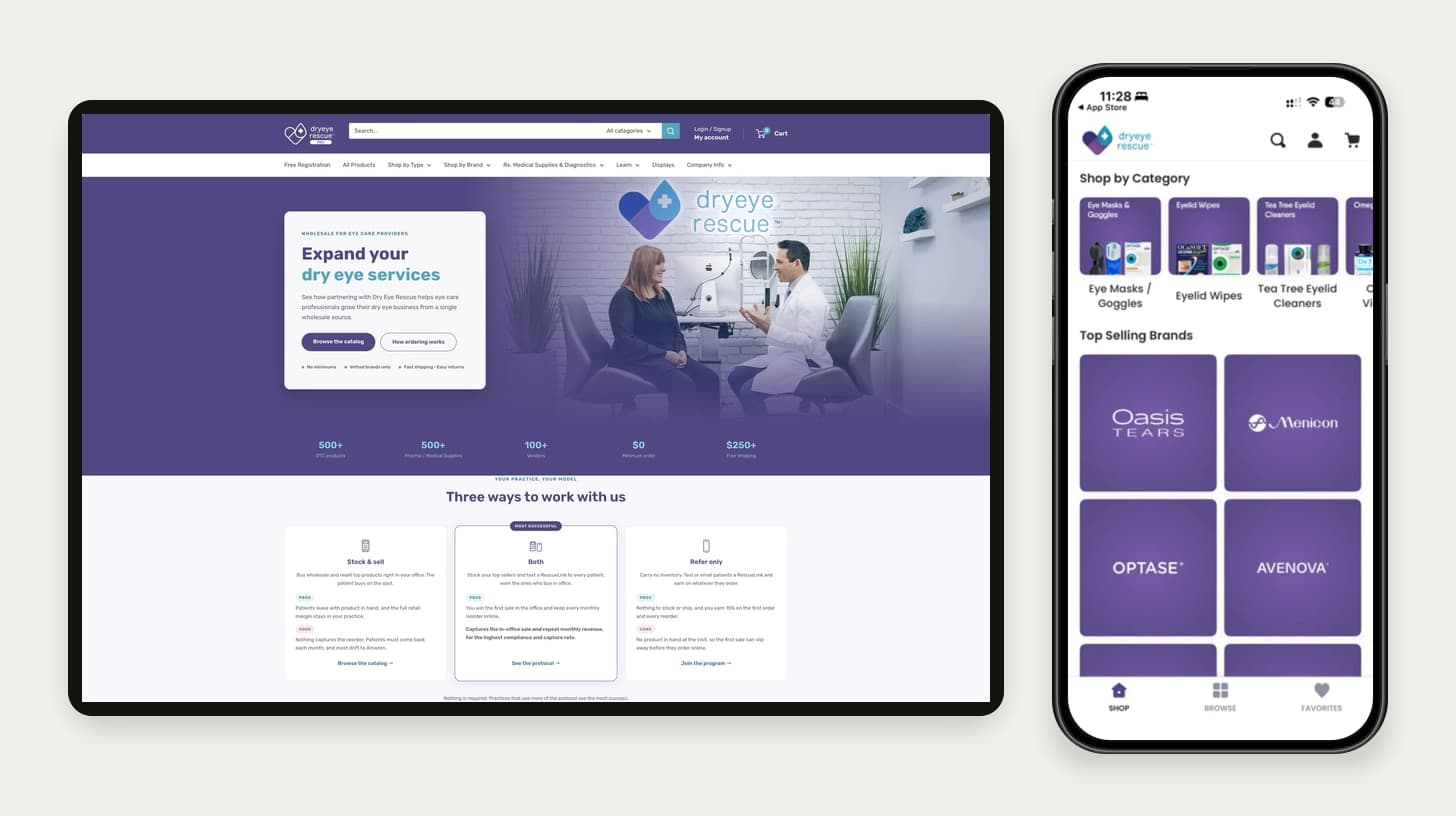
Their Shopify store didn't reflect any of that. It looked like every other supplement brand: product photos on white backgrounds, a "Subscribe and Save" badge, and marketing copy about "natural relief." Physicians wouldn't link to it from their practice websites because it looked like a consumer supplement store, not a clinical resource. AI search engines couldn't parse the clinical data because there was no structured data to parse.
The gap between what DryEye Rescue actually was (a clinically-backed product recommended by doctors) and what their website communicated (a generic supplement brand) was costing them both physician referrals and AI visibility.
The Trust Layer
Medical-adjacent commerce has a specific trust problem. Physicians will recommend a product to patients, but they won't associate their practice with a website that looks like it sells weight loss pills. The site needs to signal clinical credibility without becoming a medical device site (which triggers a different set of regulatory requirements).
We built a physician portal into the new storefront. Verified ophthalmologists and optometrists can create accounts, access clinical studies behind the products, and generate referral links that give their patients a direct path to the right product with their doctor's endorsement attached. The portal tracks referral volume so DryEye Rescue can identify their highest-value physician relationships.
The product pages themselves were rebuilt around clinical data. Every product page includes an ingredients section with concentrations and sourcing, links to published studies where applicable, usage protocols (not just "take two daily" but specific guidance for different severity levels), and a physician endorsement section showing which eye care professionals recommend the product.
None of this required changing the product itself. It required changing how the product was presented online.
Structured Data for AI Discovery
In early 2026, AI-referred traffic to retail sites grew 393% year-over-year. For a brand like DryEye Rescue, where customers often start their search with a question like "best supplements for chronic dry eye," being visible to AI search engines is a direct revenue driver.
We implemented comprehensive JSON-LD structured data on every product page. Product schema includes ingredients, concentrations, intended use, and clinical backing. FAQ schema answers the actual questions patients ask: "Can I take this with my prescription eye drops?" "How long before I notice a difference?" "Is this safe for contact lens wearers?" Medical condition schema connects the products to the conditions they address, which helps AI search engines understand context rather than just matching keywords.
Before the rebuild, asking Perplexity about dry eye supplements returned results from WebMD and Amazon. After the structured data was in place, DryEye Rescue's products started appearing in AI-generated answers with specific product details cited directly from the schema.
Subscription for Chronic Conditions
Standard subscription commerce assumes the customer might cancel. The interface is designed around flexibility: skip a month, swap products, pause your subscription. That makes sense for a coffee brand where customers might have too many bags stacked up.
Chronic condition subscriptions work differently. The customer needs the product consistently. They don't want to think about reordering. The subscription system needs to prioritize reliability and invisibility over flexibility.
We built the subscription flow around the patient's treatment schedule. During enrollment, customers select their condition severity and current usage, and the system calculates a replenishment schedule that matches their actual consumption rate. Refill reminders go out three days before the next shipment, with a one-tap confirmation. The system tracks consumption patterns over time and adjusts delivery frequency automatically if the customer consistently delays or accelerates their orders.
For the business, this approach reduced subscription churn significantly. Patients who manage a chronic condition don't churn because they're bored of the product. They churn because a delivery arrives too early, they have excess product, and they cancel to stop the accumulation. Matching delivery to actual consumption eliminates that friction.
What Changed
Within four months of launch, physician referral sign-ups reached 340 verified practitioners. Referral links from physician portals converted at more than double the rate of organic traffic because the patient arrived with their doctor's implicit endorsement already attached.
AI search visibility went from near zero to consistent presence in responses about dry eye treatment supplements. The structured data made the difference: AI search engines could now parse specific ingredients, concentrations, and clinical backing rather than scraping marketing copy.
Subscription retention at six months improved by 31 percentage points compared to the old Shopify subscription app. The consumption-matched delivery schedule addressed the primary cancellation reason without requiring any changes to the products themselves.
DryEye Rescue's revenue grew, but the more lasting change was positioning. They stopped competing with supplement brands and started competing with clinical resources. That shift opened physician partnerships, insurance formulary conversations, and enterprise health plan integrations that weren't possible when the website looked like a supplement store.
Your system is the bottleneck. Let's fix it.
30 minutes. No slides. We pull up your site live and show you what's possible.