AI in Practice
The traffic you did not design for
 Ratik3 min read
An assistant may help a shopper narrow the decision before arrival. Design the landing page to answer their next question, and measure the result.
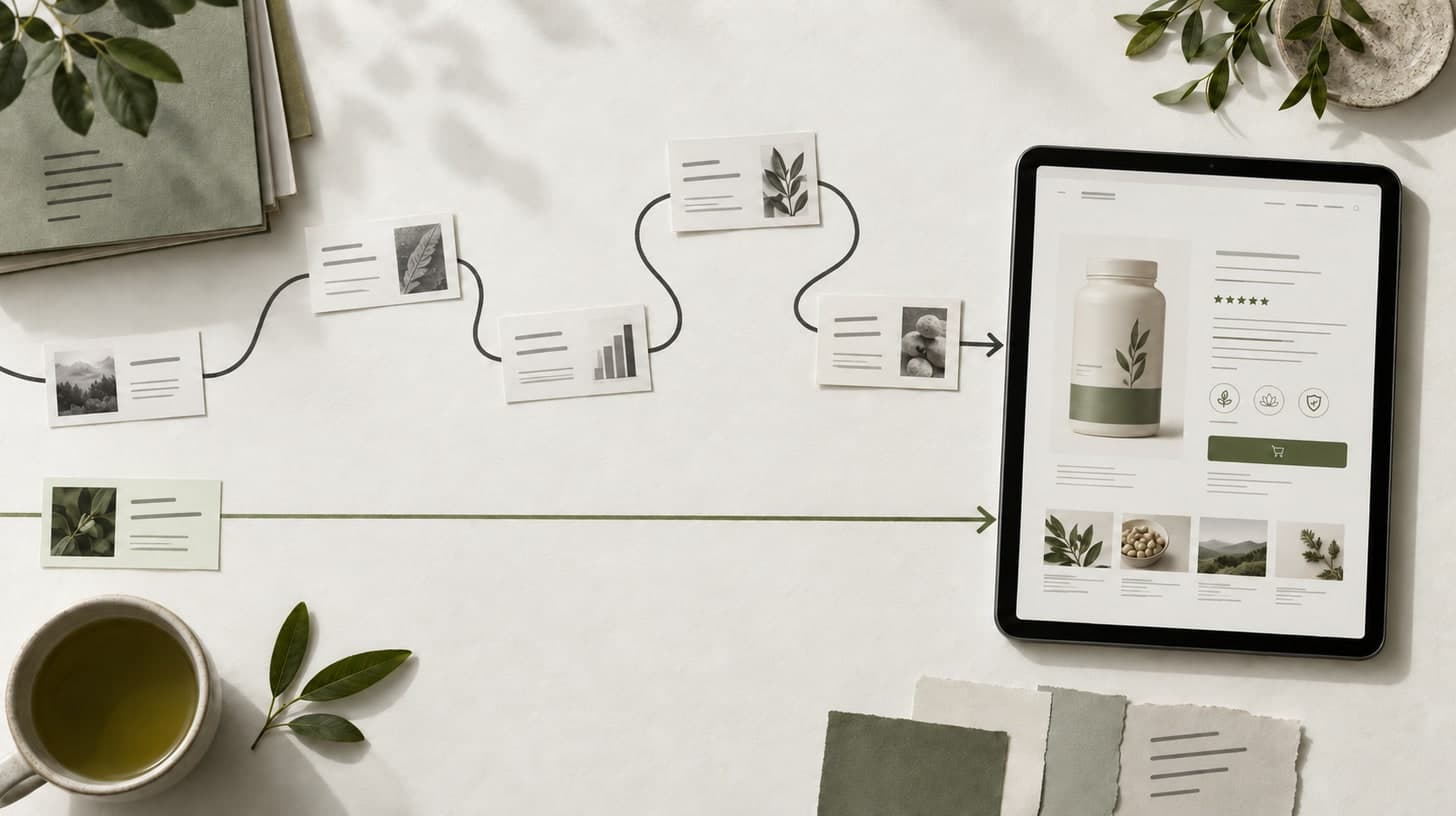
Consider two possible journeys to the same product page. A referral source alone cannot tell you how much either shopper already knows.
One shopper is exploring the category for the first time.
Another has used an assistant to compare formats, pack sizes and prices, and arrives with specific questions about your product.
If both get a page written only for a beginner, the second journey has unnecessary work to repeat. This is a design scenario, not a measured profile of all AI referrals.
Why this is worth fixing now
Adobe’s measurement of US retail found that in March 2026, AI-sourced traffic converted 42% better than non-AI traffic, spent 48% longer on site and produced 37% more revenue per visit. A year earlier the same measurement had it converting 38% worse.
That reversal warrants attention. It is an aggregate comparison with non-AI traffic, not proof that AI is your best channel or that a page redesign caused the difference.
Before prioritizing a redesign, measure identifiable AI referrals to your own pages. Volume, purchase outcomes and support questions matter more than an industry growth headline.
What an AI-referred visitor already has
A visitor may bring three things. Use them as hypotheses to test, not assumptions about every arrival.
They may have a narrowed set, after comparing options before visiting your store.
They may have a qualifier: a preferred format, pack size or published certification. Your page should let them verify that detail without guessing why an assistant named you.
They may also have an inaccurate claim about you. Show the current format, serving count and evidence clearly enough to resolve a disagreement.
What the page should do differently
Lead with the qualifier, not the category. If someone can plausibly have arrived asking about third-party testing, the testing is above the fold, as a fact with a date and a lab, not as a badge in the footer.
Help the visitor finish a comparison. Explain meaningful product differences without pretending to know which alternatives appeared in their chat.
Show the source of important product claims. The goal is to help a visitor verify what they were told, including correcting an assistant’s mistake. Whether that improves conversion is something to measure.
And keep a route to ask a follow-up question, with a person available when product facts are not enough.
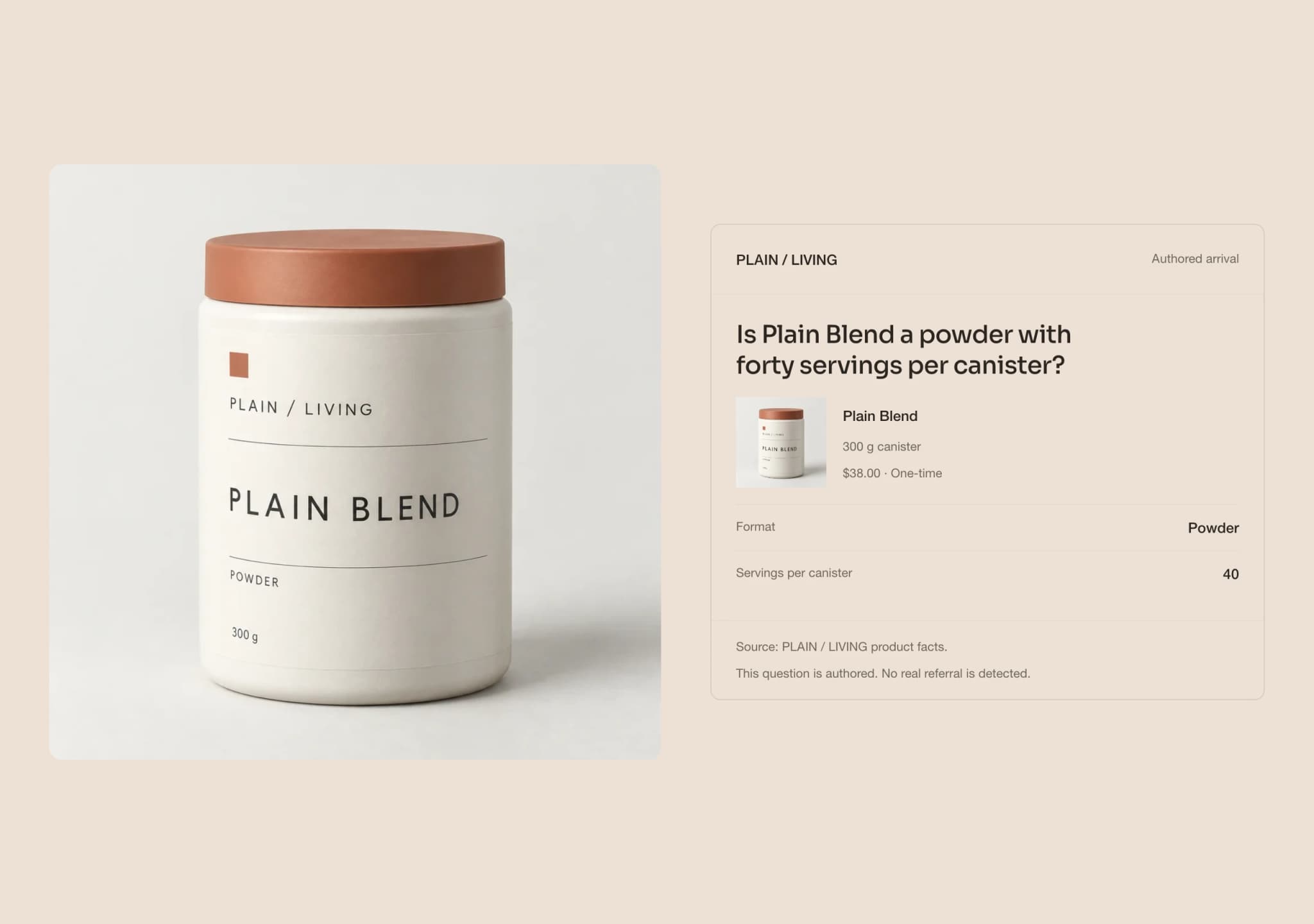
The Click-Out makes one part of that handoff tangible. Two authored scenarios ask about Plain Blend’s format and serving count, or its Cocoa flavor and canister size. Compare a generic arrival with the relevant catalog fact brought forward. The scenario supplies the qualifier; no real referral, provider or conversation is observed, and the concept reports no measured uplift.
Measuring it honestly
This is where most writing on the subject goes quiet, so it is worth being specific about what is possible.
Referrer data identifies sessions where the assistant passes a recognizable source. Missing referrers and copied links leave gaps, so report identifiable referrals rather than claiming to measure every AI-influenced journey.
A referrer alone does not contain the conversation, qualifiers or shortlist. A shopper may choose to share that context, but inferred context must not be presented as observed chat history.
Compare identifiable referral groups on the same pages over the same period: conversion, engagement and specification-section use. Report sample sizes and differences in landing-page and device mix. Observational differences do not prove intent or causation; test a page change with an appropriate control before claiming an uplift.
The conversation happened somewhere you cannot see. The page is where you get to finish it.
What would this look like for your brand?
Talk directly with a founder about one customer journey, the systems behind it and a focused prototype using your approved products and content.