AI in Practice
How we replaced keyword search with an AI that understands intent
 Neha4 min read
Keyword search matches strings. AI search matches meaning. We rebuilt a client’s product discovery with RAG and conversions jumped.
The Search That Returns Nothing
A customer lands on a pet supplement site and types “something gentle for my dog’s stomach” into the search bar. The site’s keyword search returns zero results. No product in the catalog contains that exact phrase. The customer leaves.
That same query, run through a retrieval system that understands intent, returns a pumpkin digestive supplement for dogs. The product description mentions “supports digestive health” and “gentle formula for sensitive stomachs.” The ingredients list includes pumpkin powder, probiotics, and ginger root. A human reading the description would immediately connect it to the query. Whether a search engine makes that connection depends on its matching, synonym and semantic capabilities and the available product data.
We rebuilt a client’s product discovery system using retrieval-augmented generation, and search-to-purchase conversion increased by 34% in the first eight weeks.
Why Keyword Search Fails
Lexical search is not limited to exact string matching. Search systems can combine token matching, stemming, synonym handling and semantic retrieval. Check the behavior of the configured engine rather than assuming that a keyword-based system cannot connect related terms.
Shopify’s online store search documentation describes semantic understanding on Grow, Advanced and Plus for stores with fewer than 200,000 products. It does not apply to predictive search or the Japanese locale, and third-party search apps control their own behavior. Test your actual queries, product records, plan and integration before deciding that native search cannot meet the task.
Retrieval returns source material or candidate products; ranking orders those candidates. Retrieval-augmented generation adds a generation step that uses retrieved information to produce an answer. Returning a ranked product list alone does not establish that a system uses generation.
Health and wellness categories are especially vulnerable because customers describe symptoms and outcomes while product catalogs describe ingredients and features. The gap between customer language and catalog language is where sales disappear.
Source: Shopify: Search customization and semantic understanding
What We Built
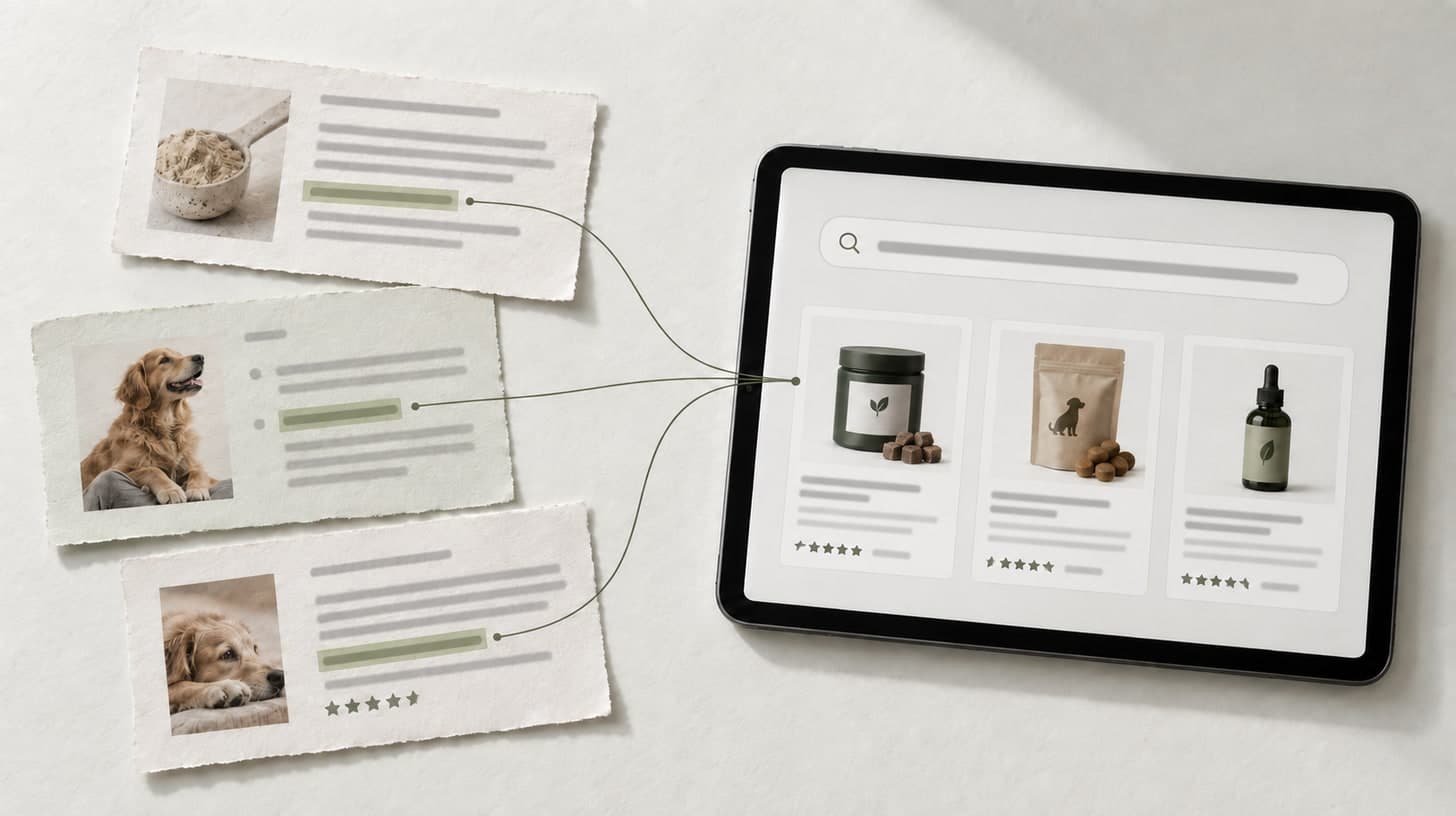
We started with the client’s entire product catalog: 340 products with descriptions, ingredient lists, usage instructions, customer reviews, and FAQ content. We converted all of that text into vector embeddings, which are numerical representations that capture the meaning of the content rather than just the words.
When a customer types a query, the system converts that query into the same kind of embedding and finds the products whose meaning is closest to the query’s meaning. “Something gentle for my dog’s stomach” lands near products about digestive health, gentle formulas, and stomach sensitivity, even if none of those products contain the word “gentle” or “stomach” in their title.
The retrieval layer returns the ten most semantically relevant products. A ranking layer then reorders them based on additional signals: purchase history for similar queries, current inventory, margin, review ratings, and whether the product is part of an active promotion. The customer sees five products, ranked by relevance to what they actually asked for.
Handling the Edge Cases
The implementation needed defined behavior for ambiguity, unavailable products and new products without review history. Those are requirements to evaluate in any search engine, not situations that lexical search must ignore.
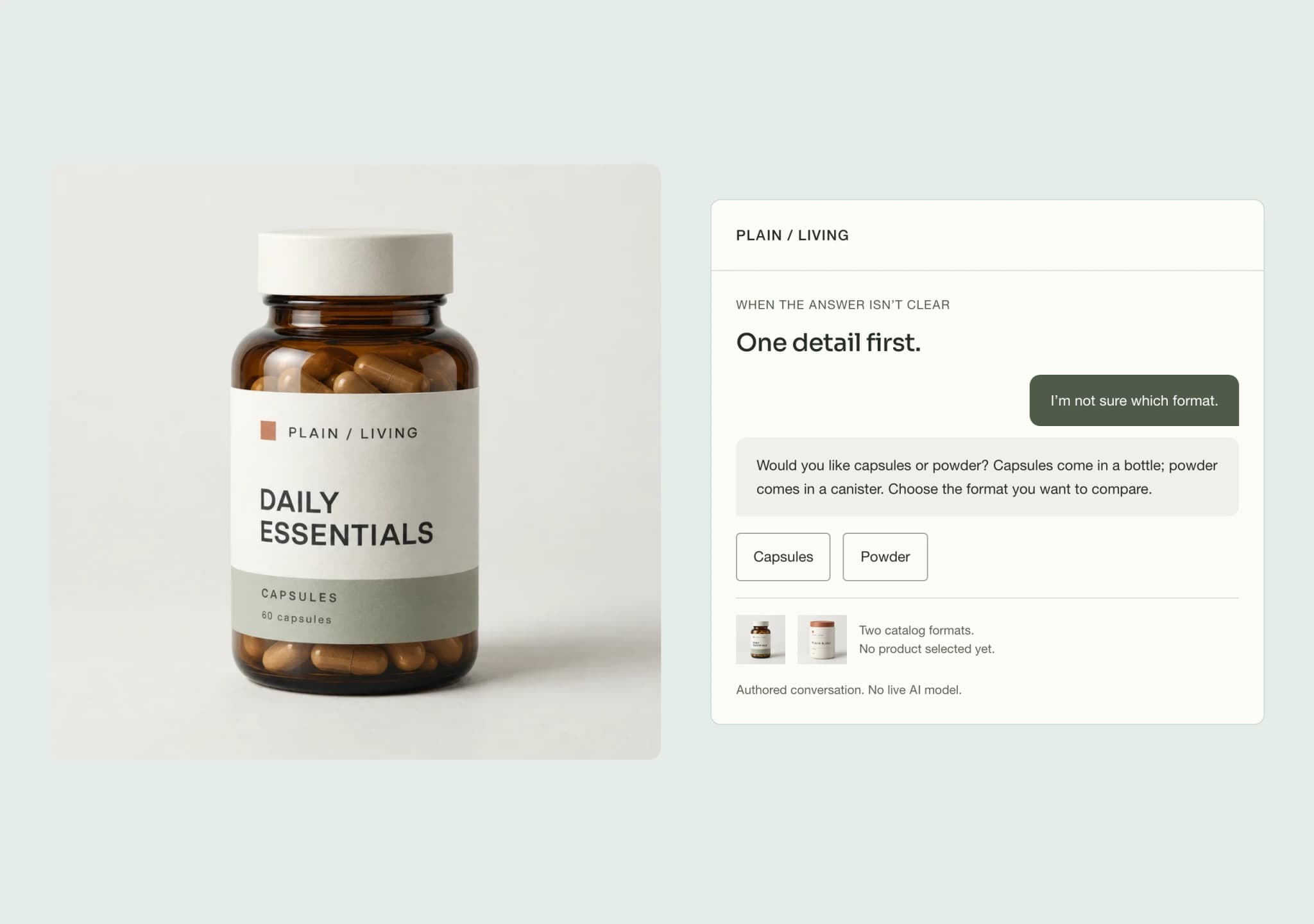
Ambiguous queries were the first challenge. When someone searches “best supplement,” the system needs context. Best for what species? What condition? We trained the ranking layer to ask a clarifying question when confidence is below a threshold, showing a short prompt like “For dogs or cats?” before returning results. This added one click but improved result relevance significantly.
Out-of-stock products were the second issue. The previous keyword search would show out-of-stock items with a “notify me” button, which frustrated customers. We filtered unavailable products from the retrieval results and surfaced available alternatives that matched the same intent profile.
New products without review data presented a cold-start problem. Products with no reviews or purchase history had fewer signals for the ranking layer to use. We addressed this by weighting ingredient similarity and product description embeddings more heavily for new products, effectively saying “this product is similar to these well-reviewed products” until it builds its own history.
What Changed After Launch
Search-to-purchase conversion went from 2.1% to 2.8% within the first eight weeks. The average number of searches per session dropped from 3.4 to 1.8, which means customers were finding what they wanted on the first try more often.
The client’s support team reported fewer “I can’t find X” tickets. Before the rebuild, about 15% of support inquiries were customers asking for help finding products that were in the catalog but invisible to keyword search. That dropped to under 4%.
The most useful outcome was the query data itself. Every search query is logged with what was shown and what was purchased. This gives the client a direct feed of customer language, which they now use to rewrite product descriptions, add FAQ content, and identify gaps in their catalog. When dozens of customers search for “probiotic for kittens” and nothing in the catalog specifically targets kittens, that’s a product development signal, not just a search problem.
The system took six weeks to build and deploy. Most of that time was spent on data preparation and embedding quality, not on the retrieval infrastructure itself. The infrastructure is modular, so the client can update product data, adjust ranking weights, and add new signal sources without rebuilding the pipeline.
What would this look like for your brand?
Talk directly with a founder about one customer journey, the systems behind it and a focused prototype using your approved products and content.