Concept Walkthroughs
Make the return decision inspectable
 Ratik3 min read
Compare three dated orders with a declared policy. Keep a supported return, an opened-product mismatch and missing evidence distinct before preparing a handover.
A return question needs more than an order status. It needs the relevant policy, the facts that rule depends on and a clear account of what remains unknown. The Post-Purchase Agent puts those pieces together before preparing a handover.
The experience uses QUIET / HOURS products, three authored orders and a fixed review date of September 12, 2026. It reads no carrier service or customer account. Its result is a local comparison, not an approved return or refund.
Start with the recorded facts
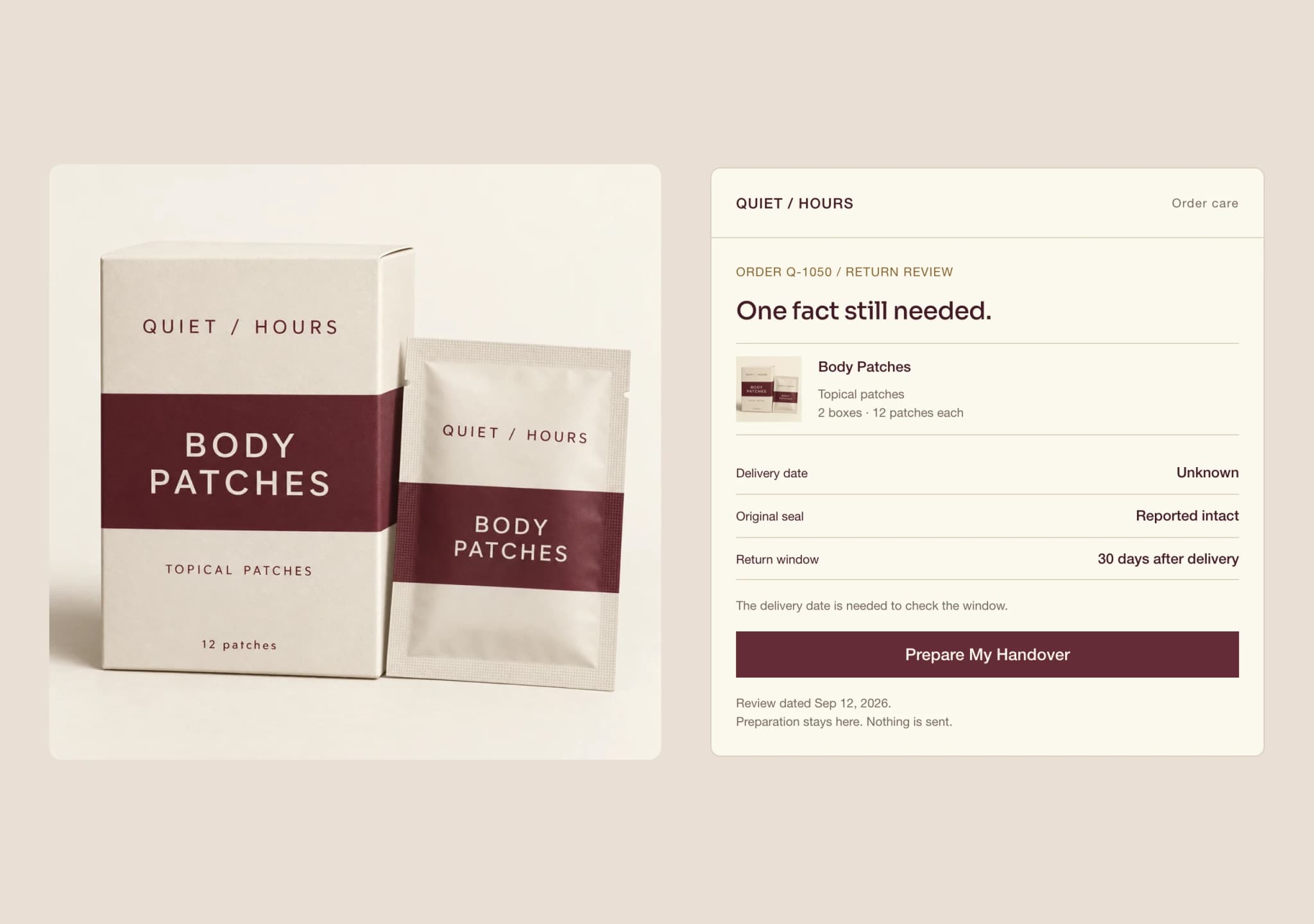
Order Q-1048 contains one box of Body Patches. Its delivery date is September 5 and its seal is reported intact. Q-1049 contains one Body Balm jar, delivered September 6 with an opened seal. Q-1050 contains two boxes of Body Patches, with an intact seal report and no delivery date.
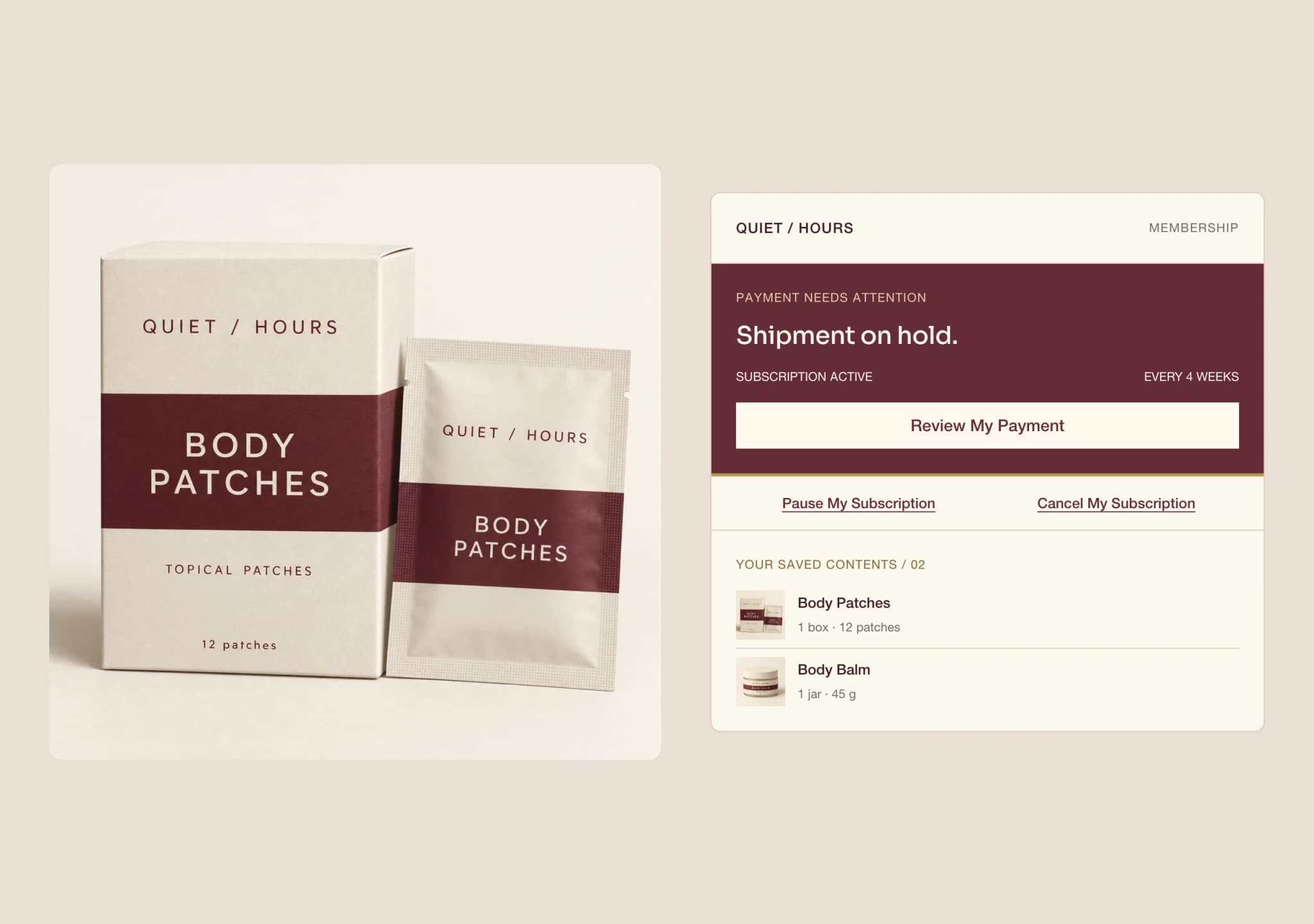
The product facts come from the shared QUIET / HOURS catalog: 12 topical patches per box and 45 g of topical balm per jar. Pack size does not change the order quantity. The records and condition reports are authored inputs; the product images are not evidence that the order arrived in that condition.
Put the rule beside its evidence
The displayed policy allows a return within 30 days of delivery and requires an intact seal. The return view compares each order with both criteria and shows the reason for its result.
Q-1048 is seven days from recorded delivery with an intact seal, so it satisfies both rules. Q-1049 passes the time window at six days but fails the seal condition. The result explains the specific mismatch instead of hiding it behind a generic rejection.
These are declared local rules. They do not establish an actual merchant’s policy, a platform’s approval or a real customer’s return rights.
Leave the missing date unresolved
Q-1050 has a seal report but no delivery date. The page cannot calculate elapsed days, so the return window remains unknown. It does not substitute the order date, assume the parcel is late or treat absent evidence as a failed condition.
That distinction is the point of the third case. An opened seal and an unknown delivery date need different explanations. One conflicts with the displayed rule; the other needs more information before that rule can be assessed.
Prepare the handover deliberately
Choose Prepare My Handover to assemble the selected order, product, quantity, policy result and evidence into a readable summary. Unresolved information travels with it. The visitor can inspect what a person would receive before any external action is considered.
The summary stays on the page. No support ticket is created, no message is sent and no return or refund is submitted. Changing orders clears the prepared summary. Changing chapters preserves it for the same order. Merely viewing the result does not prepare a handover.
Start Again restores Q-1048 in Status and clears local work. The completion event marks explicit preparation once per visit, not a resolved support case.
What this demonstrates
The Post-Purchase Agent demonstrates a reviewable path from order evidence to a policy comparison and a prepared handover. It offers a useful next step when the available facts cannot settle the question, without concealing the gap or claiming an external action happened.
A production version would need authorized order access, current applicable policies, accountable condition reports and a confirmed support destination. Any return submission or refund would be a separate operation with its own controls. The related article explains why those responsibilities should stay explicit, including the limited scope of Google’s checkout requirements.
What would this look like for your brand?
Talk directly with a founder about one customer journey, the systems behind it and a focused prototype using your approved products and content.