Guides
After the box ships
 Ratik3 min read
A useful return answer needs an applicable policy, order evidence and a clear handover. Keep missing information distinct from a rejection or a completed action.

“Can I return this?” is a question about a specific order. A useful answer needs the applicable policy, the event its time window starts from and the item’s reported condition. If one of those facts is missing, the next step should make the gap clear.
The Post-Purchase Agent explores that task with dated local orders. Its purpose is to make the decision inspectable before anyone submits a request. It does not claim that a carrier, support team or commerce platform has acted.
Give the rule a clear starting point
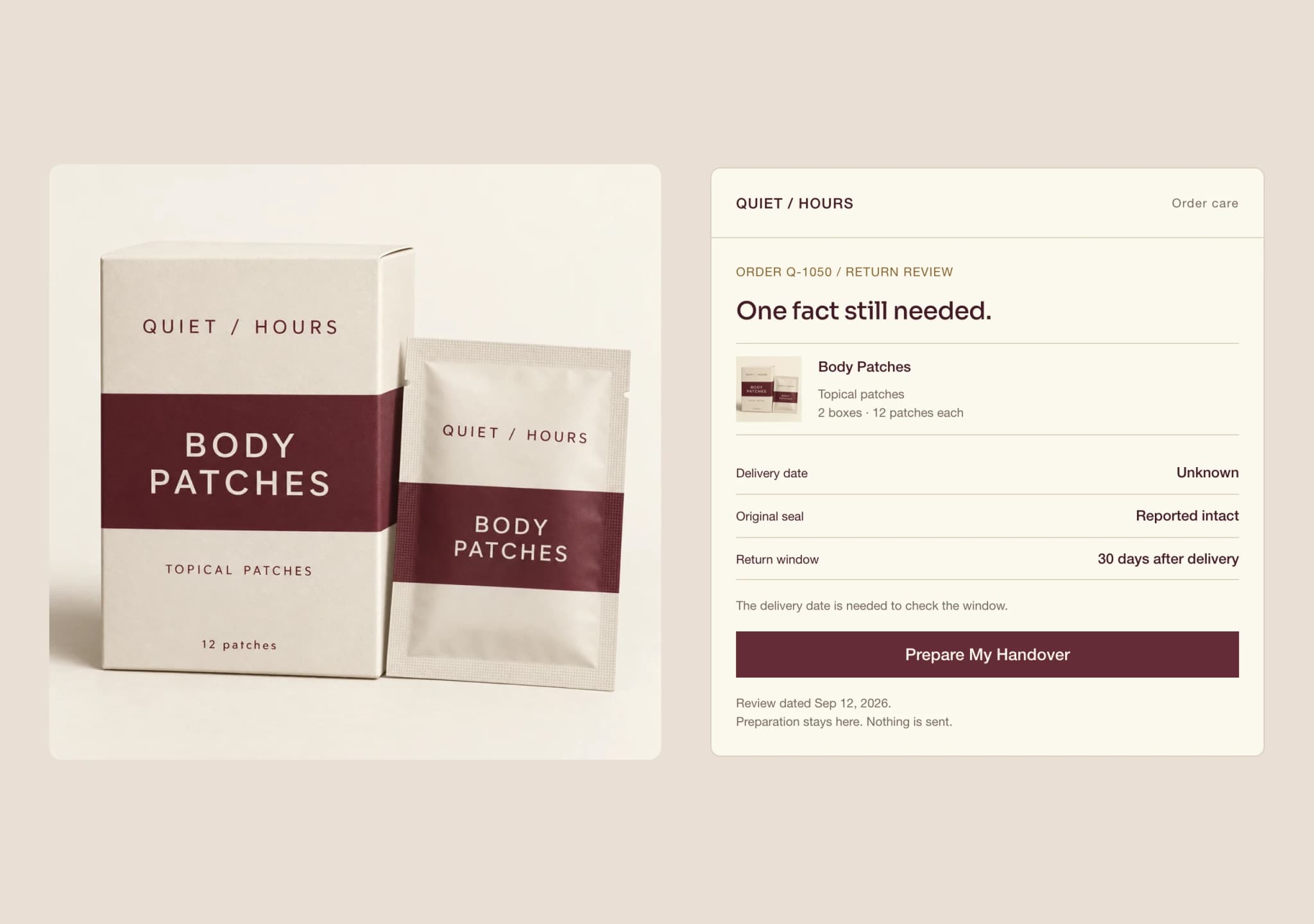
A return window needs an anchor. If the rule counts days from delivery, an order date cannot silently replace a missing delivery date. Show the relevant date, the review date and the calculation together.
A condition rule needs the same precision. If the policy requires an intact seal, show the condition report separately from the product photograph. A package image cannot establish how this customer’s item arrived or whether it has since been opened.
These are design choices for a declared policy. Real implementation begins with the applicable merchant policy and its exceptions, rather than borrowing the concept’s rules.
Keep the platform requirement scoped
Google’s UCP checkout preparation requires return information, including a window, cost and full-policy link, plus at least one customer-support contact method. Those requirements belong to that checkout integration. They are not a universal test for appearing in Search or a claim that every store must implement UCP.
Source: Google: Prepare your Merchant Center account for UCP checkout
Separate a specification from a live service
Google’s implementation overview states that not all features defined by UCP are available on its surfaces. A protocol’s scope therefore does not establish that a particular merchant or platform already supports automated tracking, return initiation or customer service.
Publishing a policy, reading an order and submitting a return are also separate operations. Each needs its own data source, authorization and clear result. A support contact does not, by itself, prove that a request was delivered or accepted.
Source: Google: UCP integration overview and feature availability
Distinguish a mismatch from missing information
The concept uses a declared 30-day window and intact-seal rule, reviewed on September 12, 2026. A sealed order with delivery recorded seven days earlier satisfies those displayed criteria. An opened item delivered six days earlier fails the condition rule.
A third order has an intact-seal report but no delivery date. That is an information gap. The page cannot calculate the window and leaves the result unknown. It neither rejects the return nor invents a date to produce a complete answer.
The distinction matters beyond this example. A known fact that conflicts with a rule can be explained. Missing evidence should identify what a person needs to establish next. Neither outcome grants a real refund or resolves a customer’s statutory rights.
Prepare a handover someone can inspect
Carry the selected order, relevant policy, known facts, result and unresolved information into the handover. Let the customer review that summary. If the selected order changes, clear the previous preparation so another order’s context cannot be implied by a stale result.
Use precise language for the action taken. Prepared means the summary exists locally. Sent, received, approved and refunded require confirmation from the system responsible for each action. The concept stops at preparation and creates no support ticket or outbound message.
Start with the questions your team handles
Review representative post-purchase questions and identify the facts each answer depends on. Separate policy decisions from missing order evidence and cases that need a person’s judgment. That gives you a focused scope without assuming every exception should be automated.
A production journey also needs a current policy owner, a support destination and a way to handle unavailable or stale records. Evaluate whether customers can understand the result and reach the appropriate next step. A readable policy and a prepared summary are useful design work; they are not evidence of fewer tickets or faster resolution.
What would this look like for your brand?
Talk directly with a founder about one customer journey, the systems behind it and a focused prototype using your approved products and content.