Verticals
A routine is not a subscription
 Neha4 min read
A delivery schedule, a stock estimate and a customer’s plan answer different questions. Keep those records separate, and let the customer define the routine.

A subscription account can tell a customer what is due to ship and when. It cannot tell you what they chose to put in their daily plan, or whether they used a product. Treating those records as interchangeable asks the account to know more than it does.
For a brand with several products, a useful next step may be a place where customers organize their own choices. That starts with separating three jobs: estimating supply, managing the billing relationship and remembering a plan.
Three jobs that get confused
Supply asks what remains and when more may be needed. Its calculation depends on declared quantities and assumptions about change over time. A delivery date alone does not establish what is left in a cupboard.
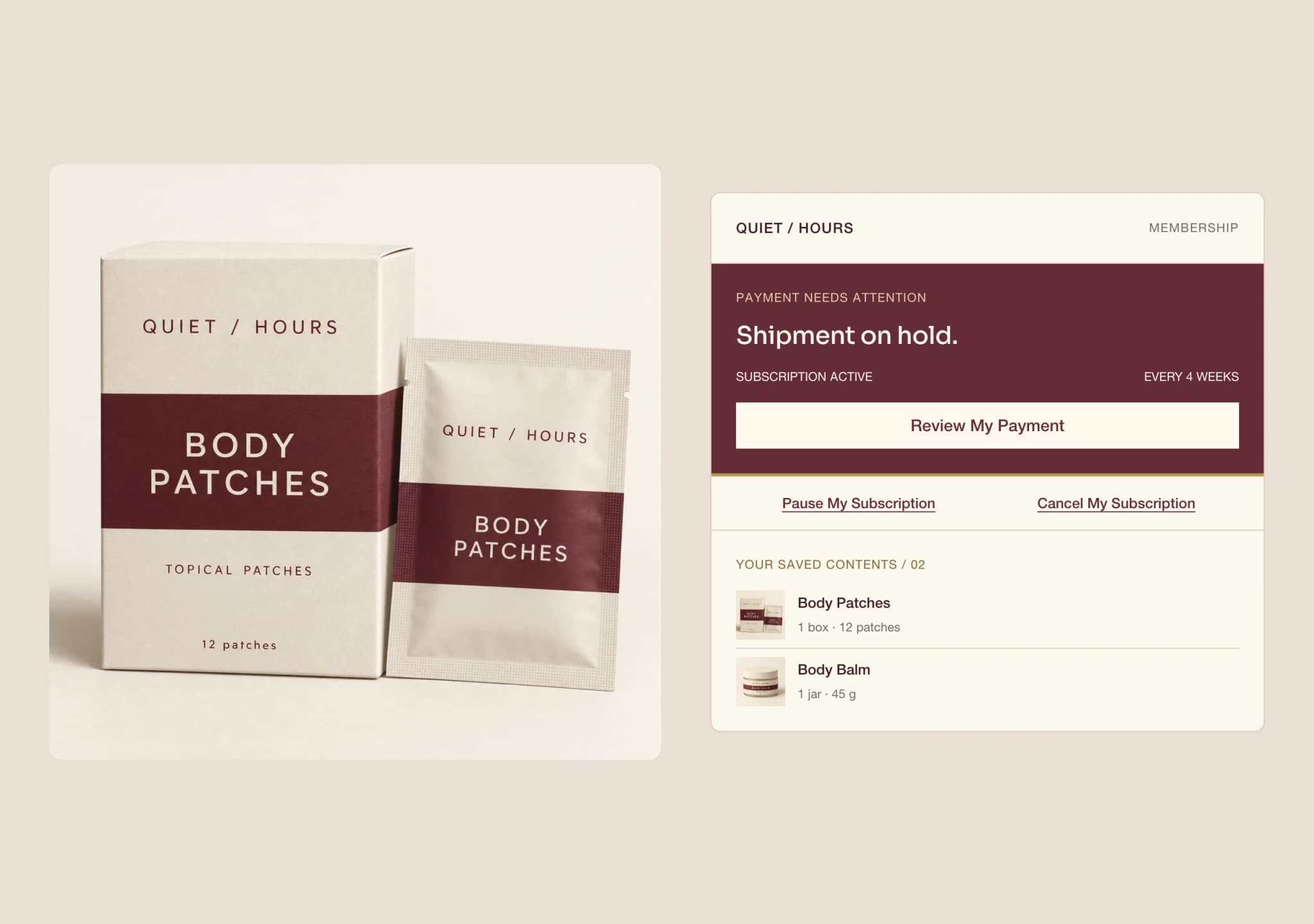
Subscription cadence concerns the commercial relationship: what ships, how often, when payment needs attention and how to pause or cancel. Those controls should reflect the customer’s account decision. They do not determine a product-use schedule.
Routine planning records the customer’s own selection and organization of products. It can remember a Morning, Day or Evening slot without deciding that the product belongs there. A plan is an intention. A self-reported check-in is a separate record. Neither proves use or adherence.
Keeping these jobs distinct changes how the interface behaves. A missed check-in does not automatically consume stock, change a delivery date or cancel a subscription. Any connection needs an explicit rule and the customer’s intended action, not an inference hidden between screens.
Let several products remain separate choices
A multi-product range does not need to become a prescribed bundle. Someone may choose one product, place two in different time slots or remove an item while keeping the rest of the plan.
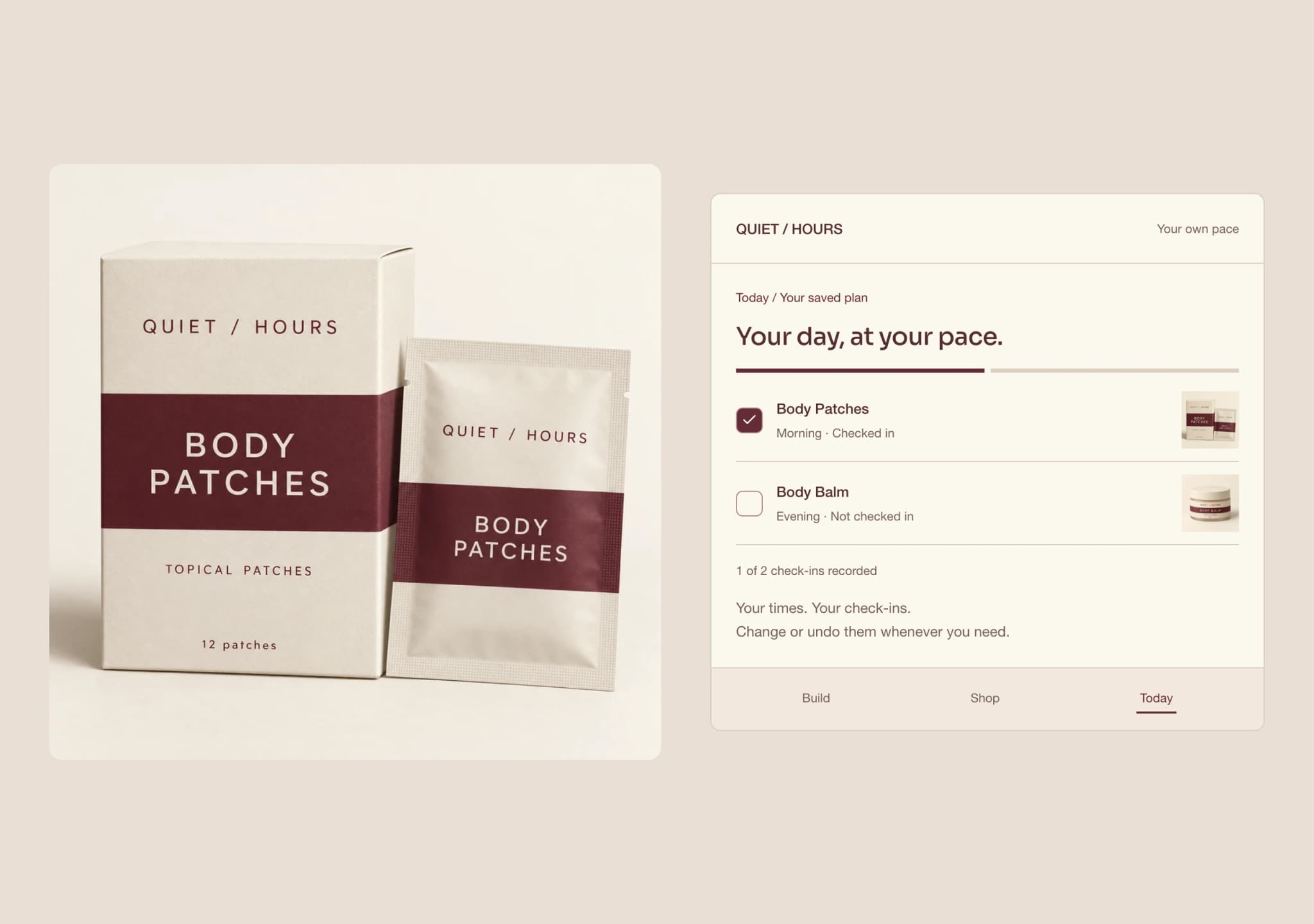
The QUIET / HOURS Daily Routine concept uses Body Patches and Body Balm to make those choices visible. The interactive planner begins empty. The customer chooses the products and their Morning, Day or Evening positions. It does not recommend using the products together or infer a wear schedule from the topical format.
Each saved product has its own reversible check-in. Recording one does not record the other. Clearing a check-in does not remove the product from the plan. These distinctions give the customer room to correct a record without undoing an unrelated decision.
Remember what the customer decided
The honest starting point is a saved plan with a visible draft. Editing a time slot should not silently rewrite Today. Saving should make the new choice clear; discarding should restore the previous one.
The same principle applies to purchase preferences. A preference for two boxes or jars can help prepare a later review. It does not tell someone how much to use. The four-week purchase option describes delivery, not a daily routine.
This is a design boundary rather than a substitute for product guidance. If a service is intended to provide instructions, those instructions need their own approved source and review. The planner should not generate them from a time slot, a purchase quantity or a check-in.
Make the next action explicit
In Daily Routine, opening Shop from the saved plan brings the first selected product and its purchase quantity into view. Nothing is added to the basket automatically. The customer can inspect the product, change the quantity or purchase option, and decide whether to add it.
Today and reminders follow the saved plan. Draft changes remain draft changes until saved. Reminder controls on this concept only change text locally; no message is scheduled or sent.
There is also a small expandable checklist for reviewing the routine and checking what is on hand. Those are organization tasks. Completing them does not establish product use or deplete an inventory record.
The result is deliberately limited. The concept uses authored product facts and AI-generated imagery. It has no account, order import, real checkout or notification delivery. Start Again clears its local state. A production service would need those capabilities scoped and connected explicitly.
Measure a useful plan before claiming retention
A planner offers concrete questions to test: can the customer place and remove the intended products, tell saved choices from edits, undo a check-in and reach a purchase review without ordering accidentally?
Those checks establish whether the interface performs the proposed task. More check-ins do not, by themselves, establish improved adherence, product outcomes or added revenue. A canceled subscription does not reveal why someone stopped, and a quiet planner does not supply that missing evidence.
Keep commercial evaluation separate. Compare customer outcomes across channels, account for costs and describe the limits of the evidence before attributing a retention change to the planner. The supporting measurement guide explains that distinction.
A useful routine experience can begin with a smaller promise: remember the customer’s plan accurately, keep it editable and make the next choice explicit. That gives the product a job beyond displaying the next charge date.
What would this look like for your brand?
Talk directly with a founder about one customer journey, the systems behind it and a focused prototype using your approved products and content.