Happy Healthy You · Women’s Health App
The assessment ends in a basket, not a results page.
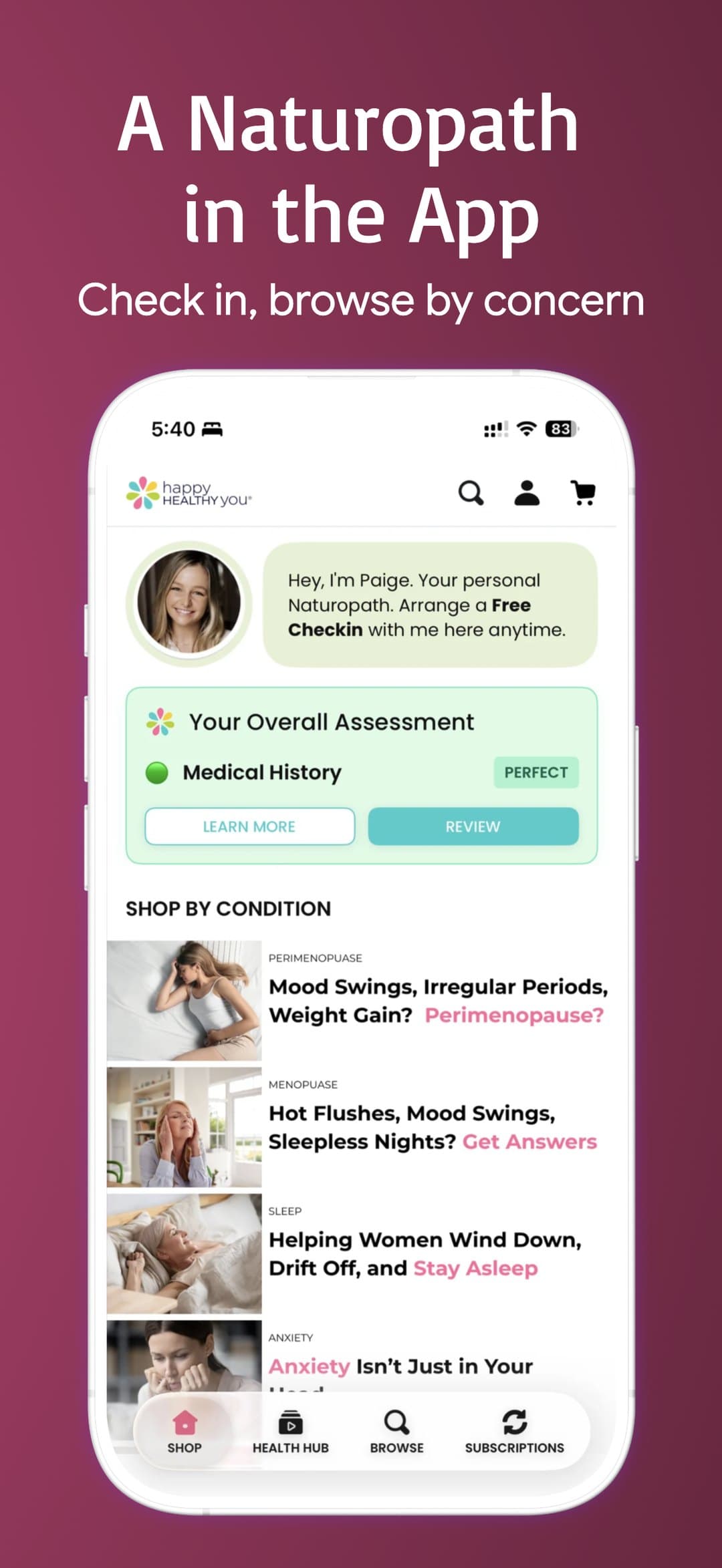
Customers answer questions about how they are feeling and get back a scored report across six areas. Each area that gets flagged explains itself and names specific products, buyable without leaving the page. We launched their native iOS and Android app around that flow.
Project Scope
Most wellness quizzes end where the shopping should start.
A scored assessment, a report that names products, a thirty-day programme with its own shopping list, a practitioner check-in, and subscriptions customers manage themselves.
A quiz that recommends nothing is just a survey.
Wellness brands are good at asking questions. The customer fills in a long form about how they are sleeping and feeling, and gets back a page of results.
Then the trail goes cold. They are better informed and no closer to buying anything, because turning what someone told you into a specific product — at that moment, without starting a new search — is the part everyone skips.
The value was never in the questions. It is in what arrives at the end of them.
What We Built
One app carrying the assessment, the report it produces, the products that report points to, and the programme that follows.
An Assessment That Scores Itself
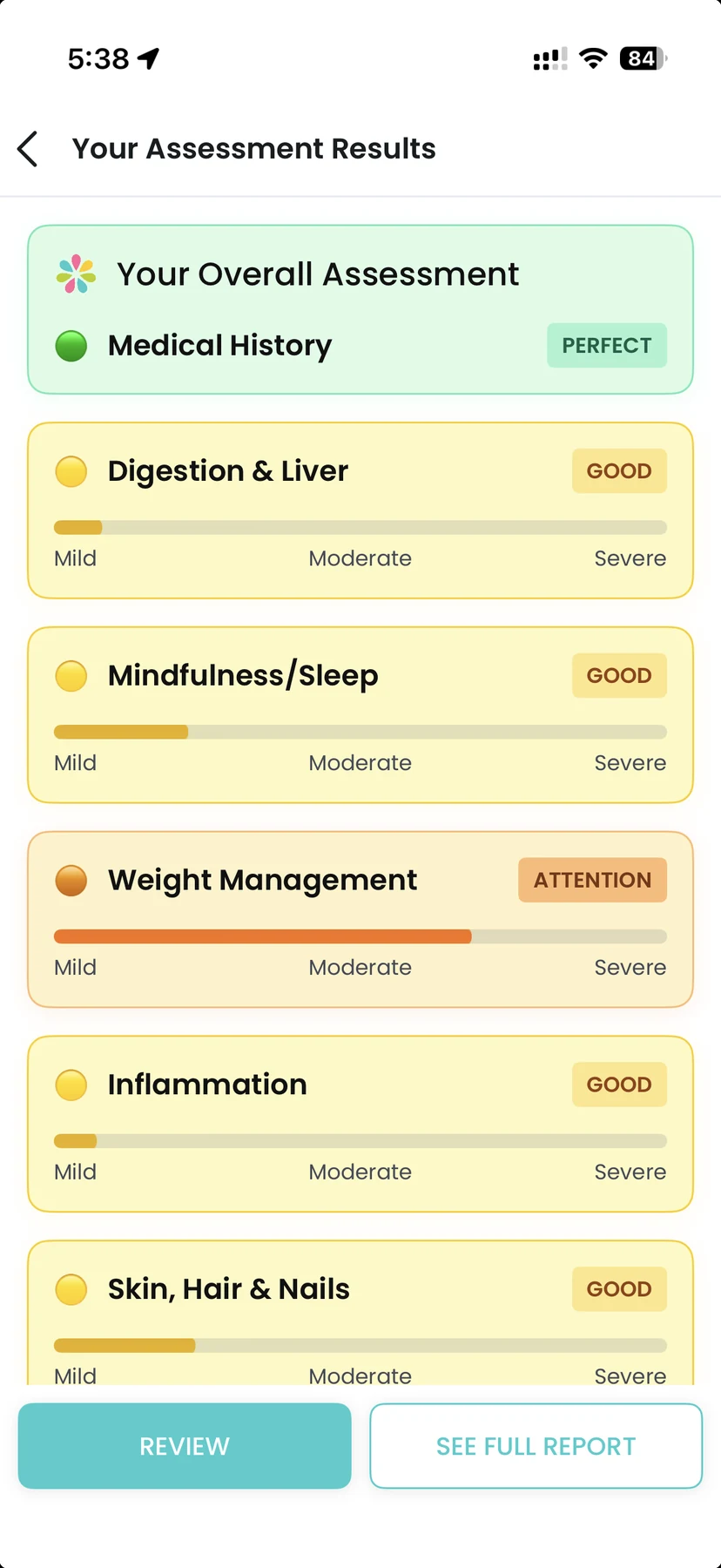
Six areas, each with its own reading.
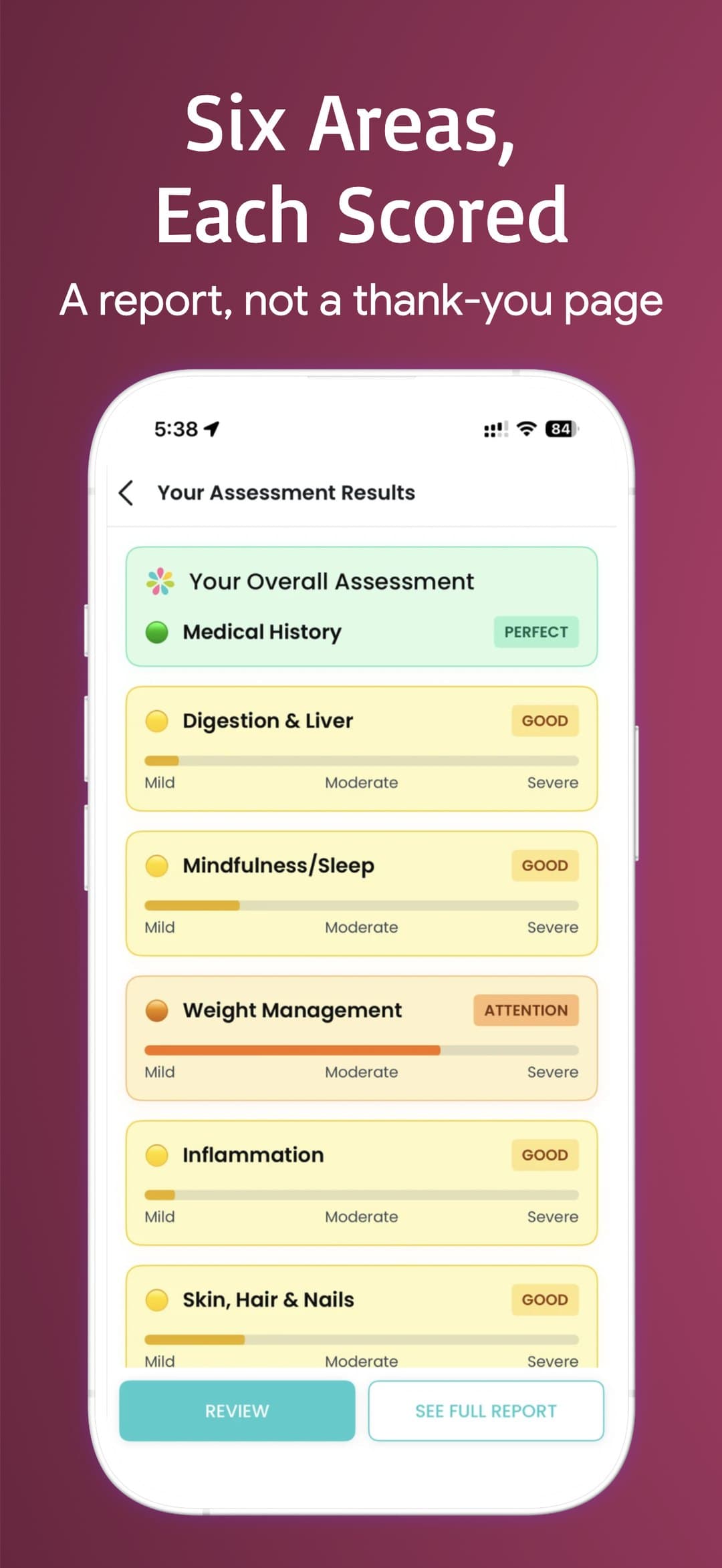
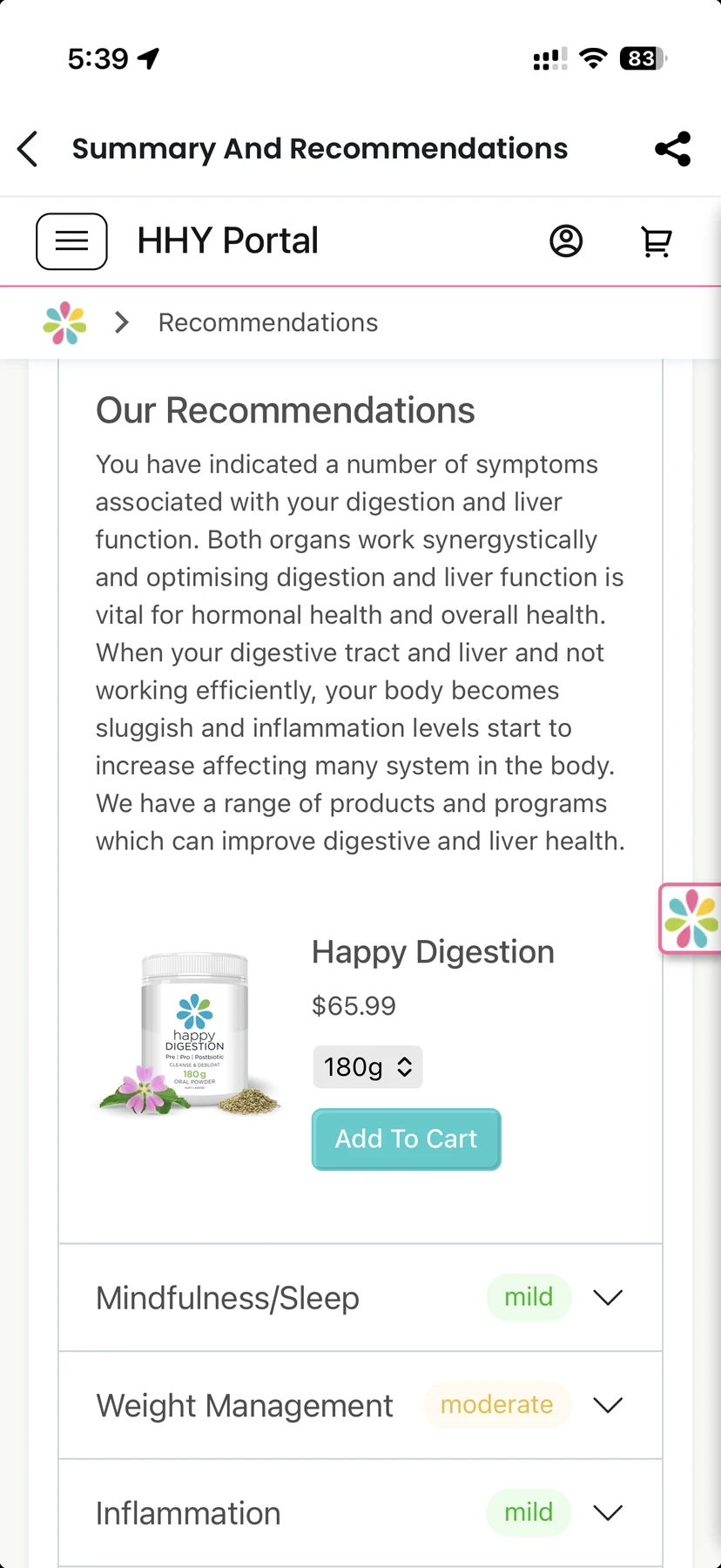
Answers return a report covering digestion and liver, mindfulness and sleep, weight management, inflammation, skin, hair and nails, and medical history — each on its own scale rather than rolled into a single number.
A customer can see which areas came back clear and which came back flagged, and open the full write-up on any of them.
From a Flagged Area to the Cart
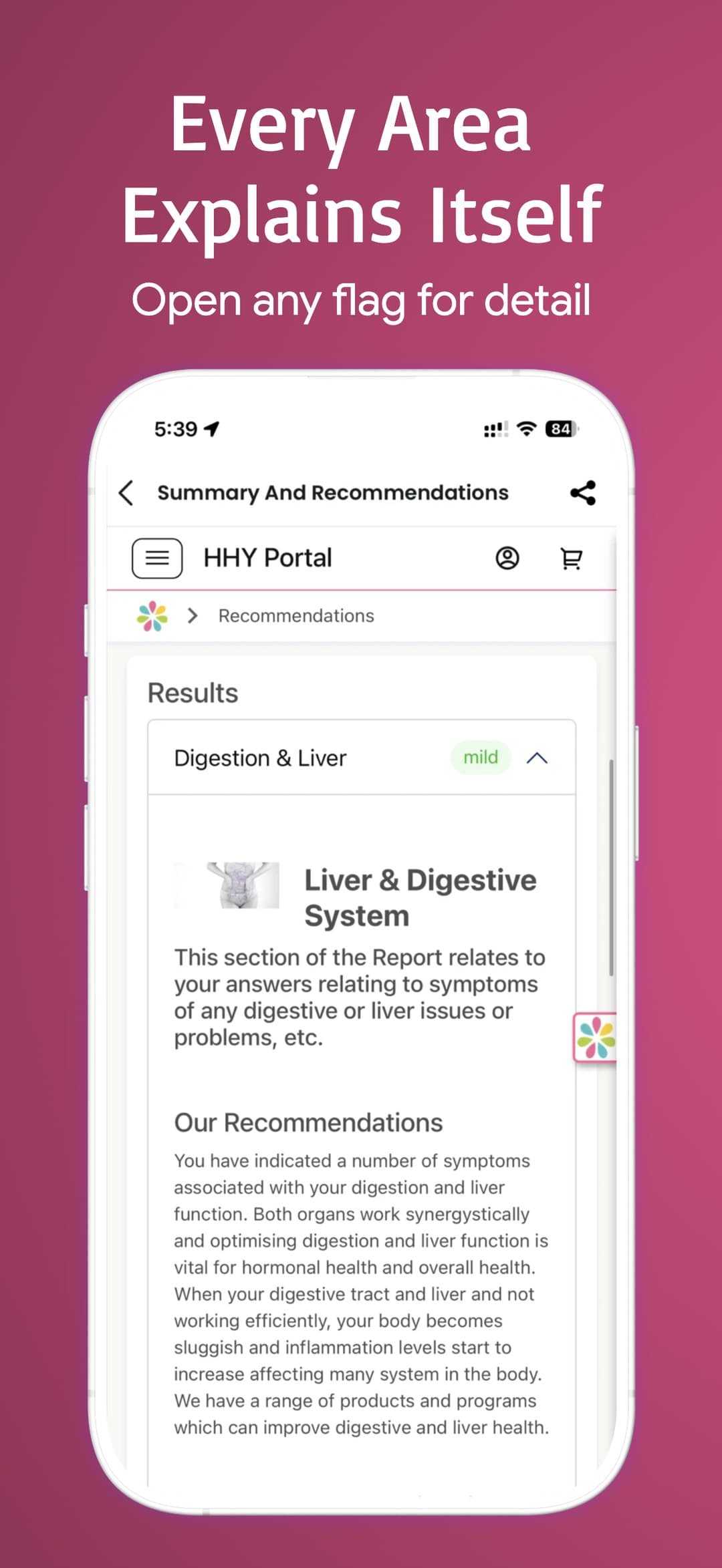
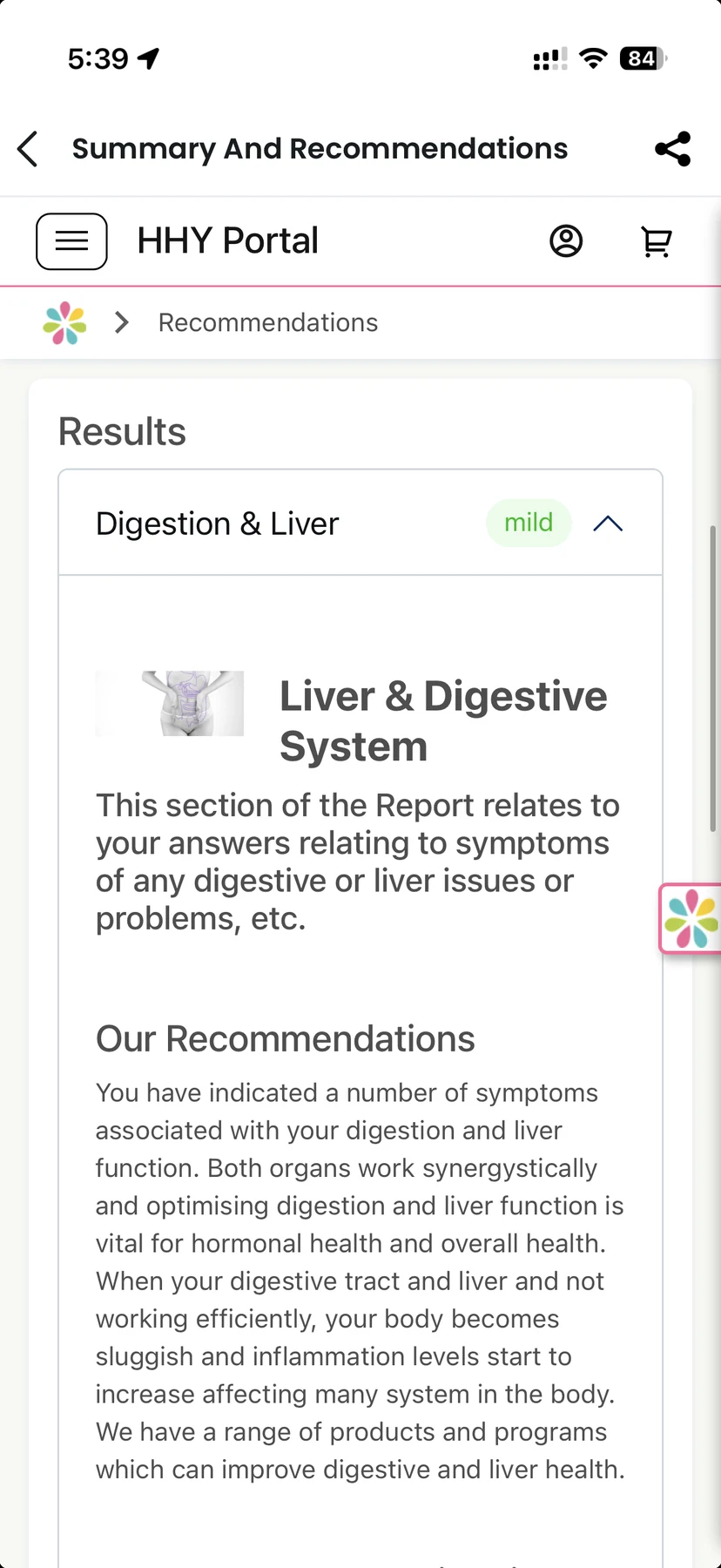
Each area explains itself, then names products.
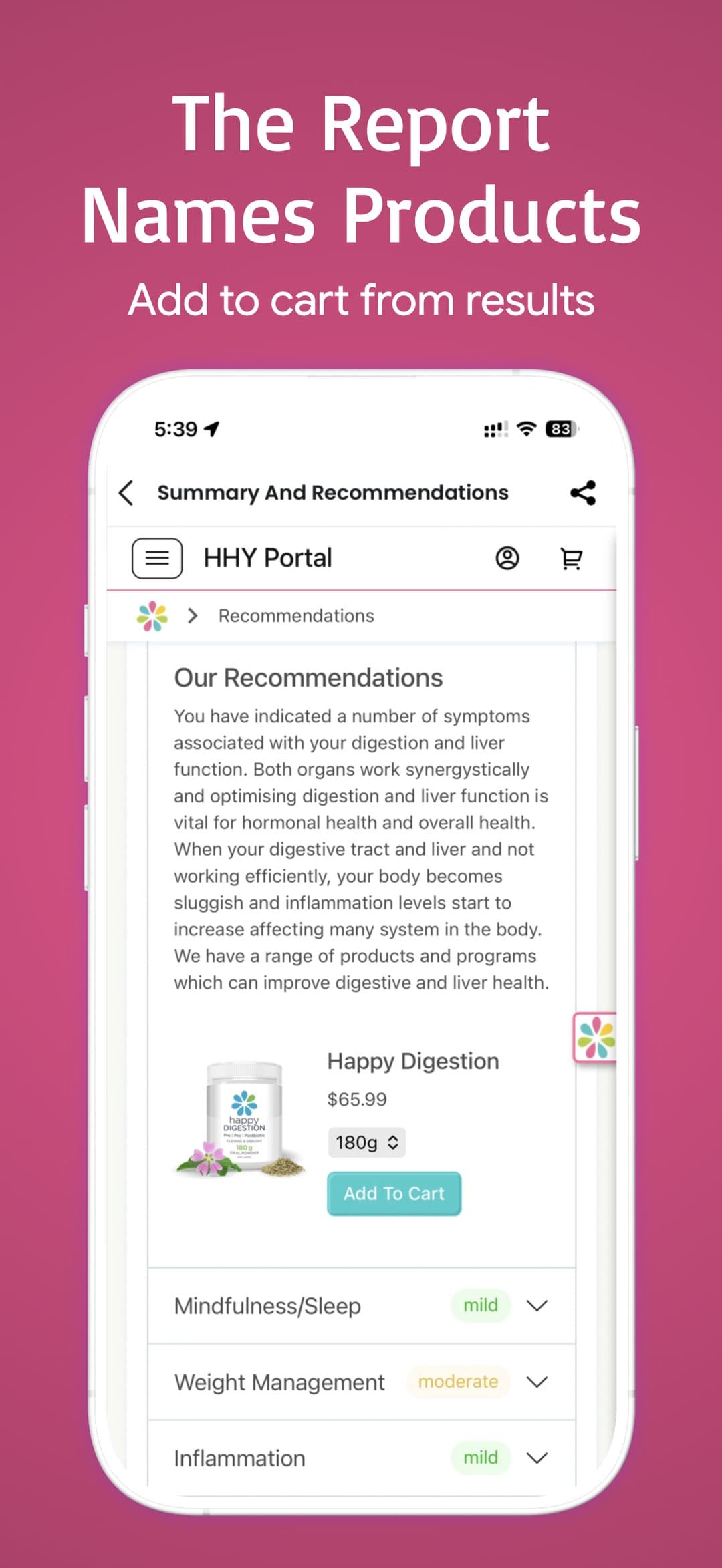
Every flagged area carries its own explanation and the products from the range that relate to it, with add-to-cart in place. The report is the storefront rather than a detour on the way to one.
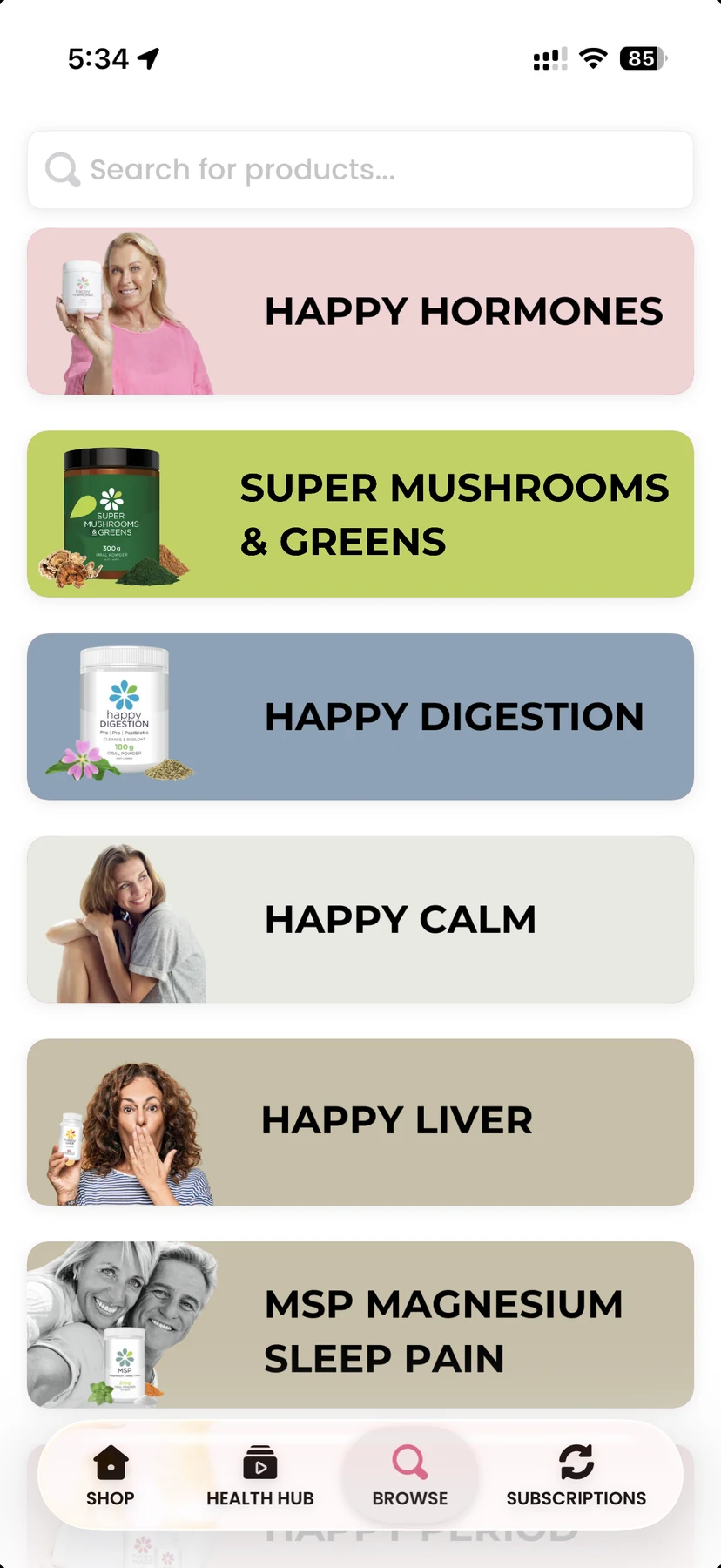
The range stays browsable on its own terms too — Happy Hormones, Happy Digestion, Happy Liver, Happy Calm and the rest — for customers who already know what they came for.
Thirty Days, With a Shopping List
A guided programme, day by day.
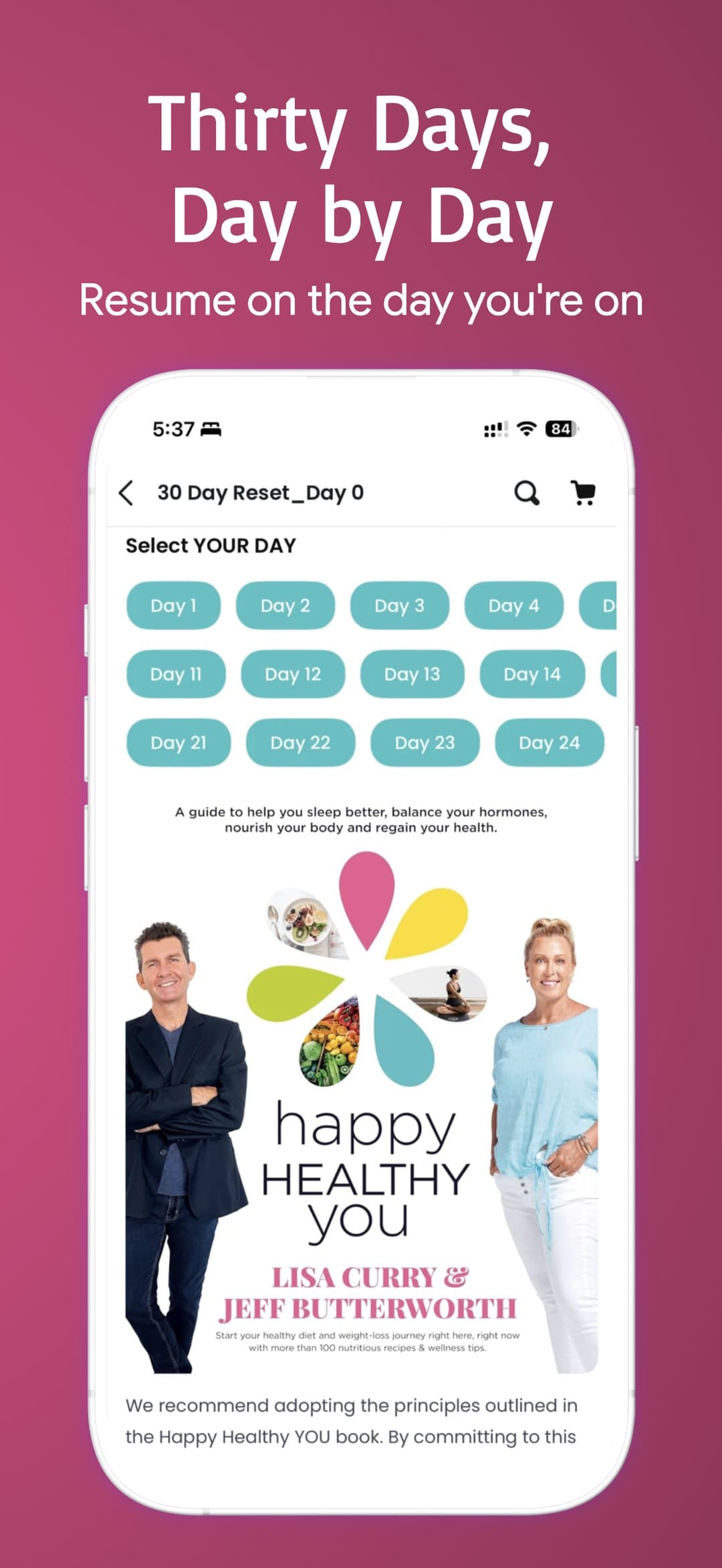
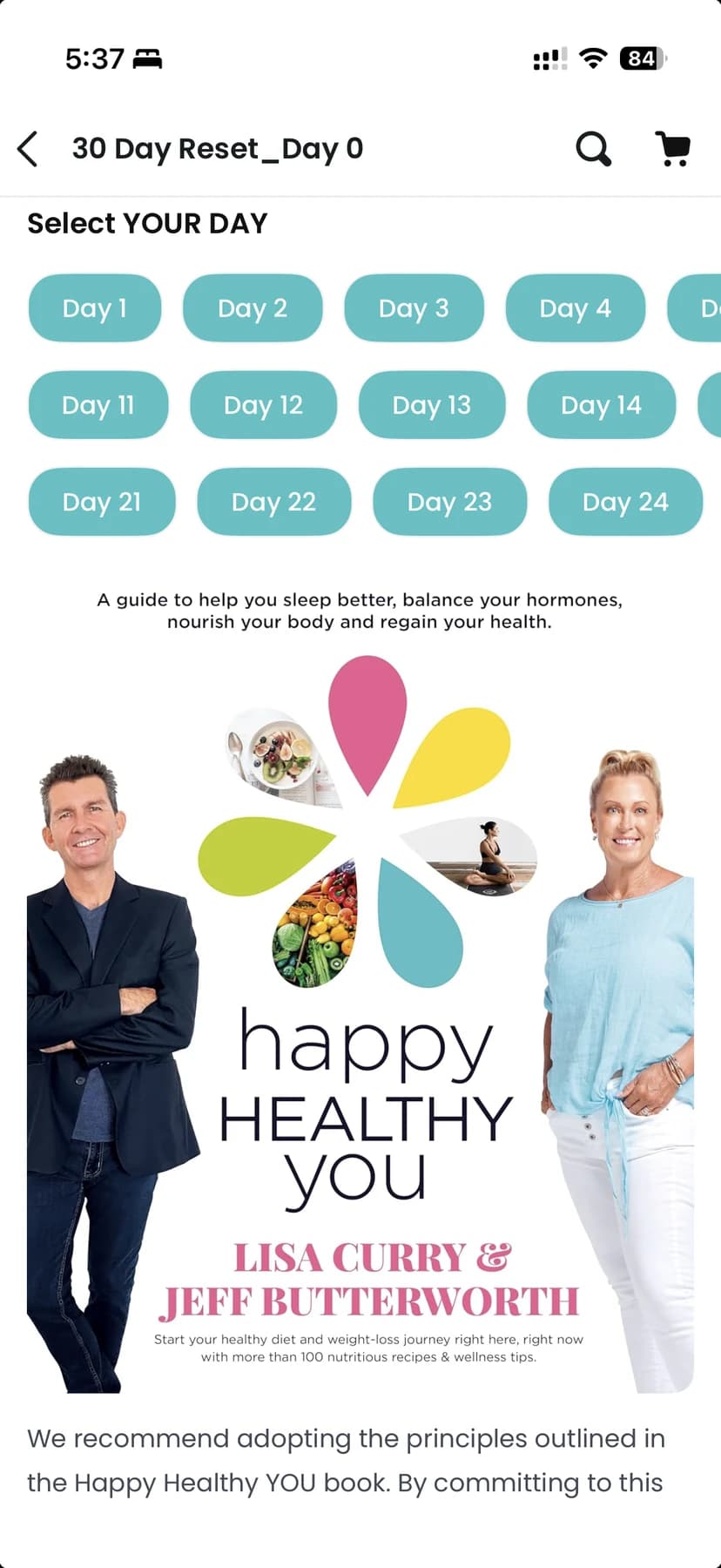
The 30 Day Reset opens on a day selector rather than a wall of text, so someone on day fourteen lands on day fourteen.
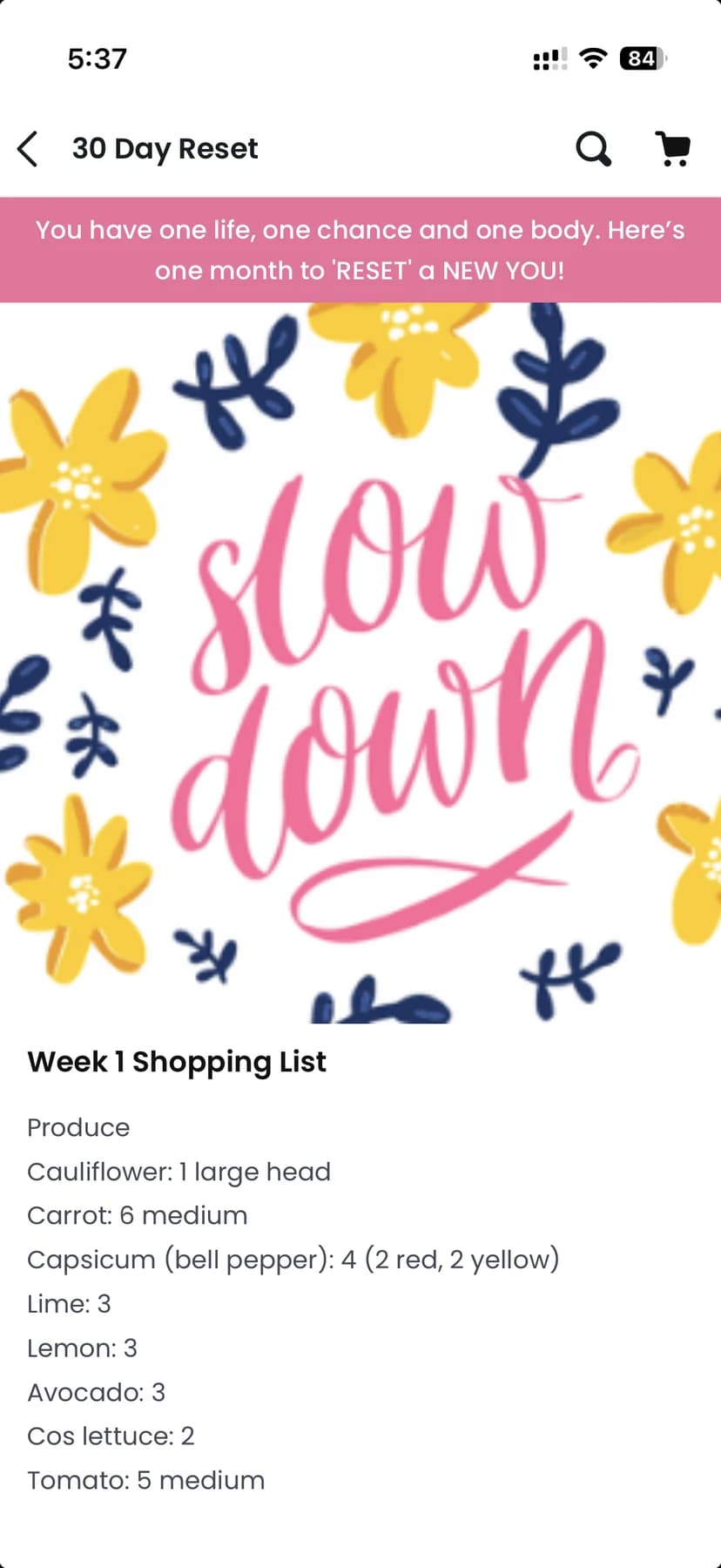
Each week brings its own produce shopping list. A programme that tells you what to buy this week is a programme people stay on.
A Health Hub, and Their Own Reference Card
Articles by topic, recipes, and the product reference in one place.
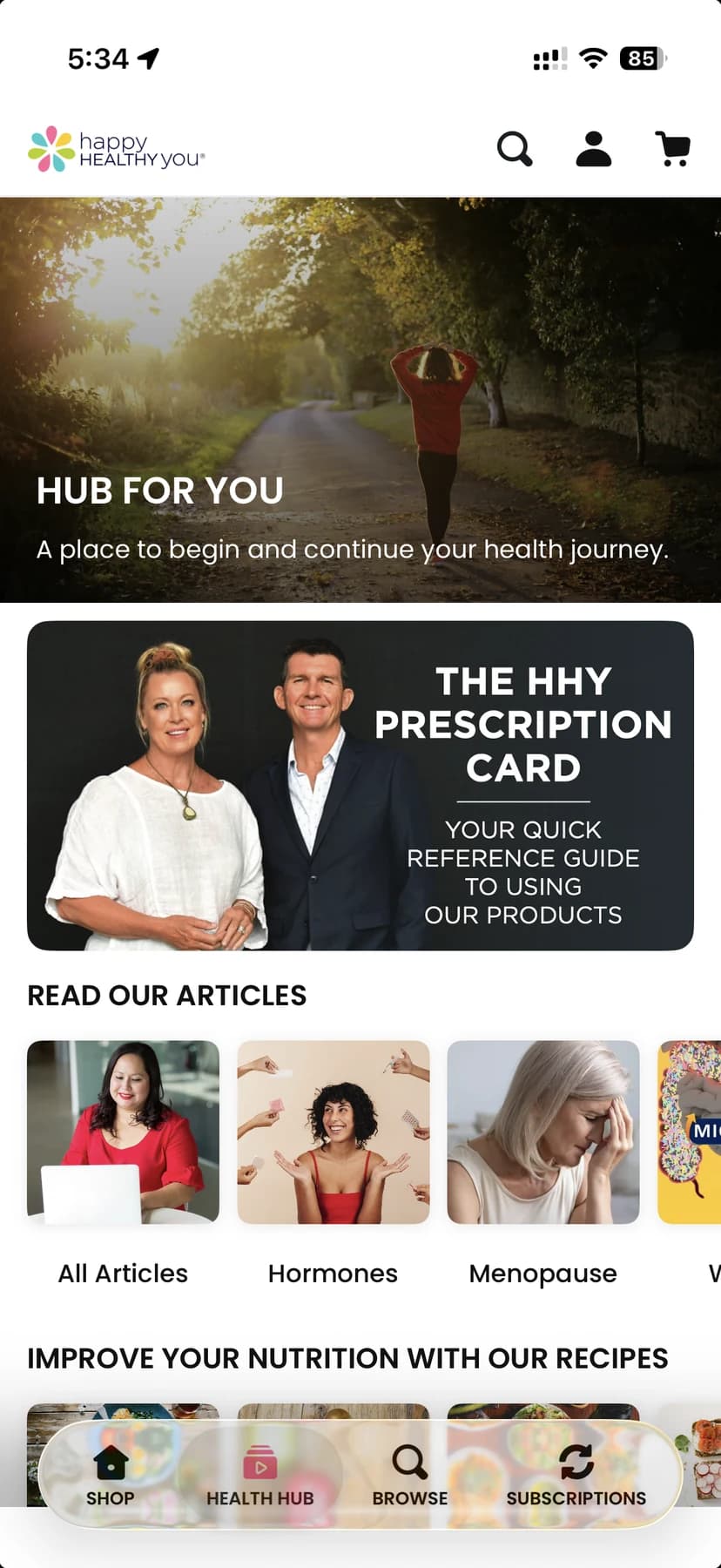
The Health Hub groups articles by the topics customers actually search — hormones, menopause and the rest — alongside recipes tied to the range.
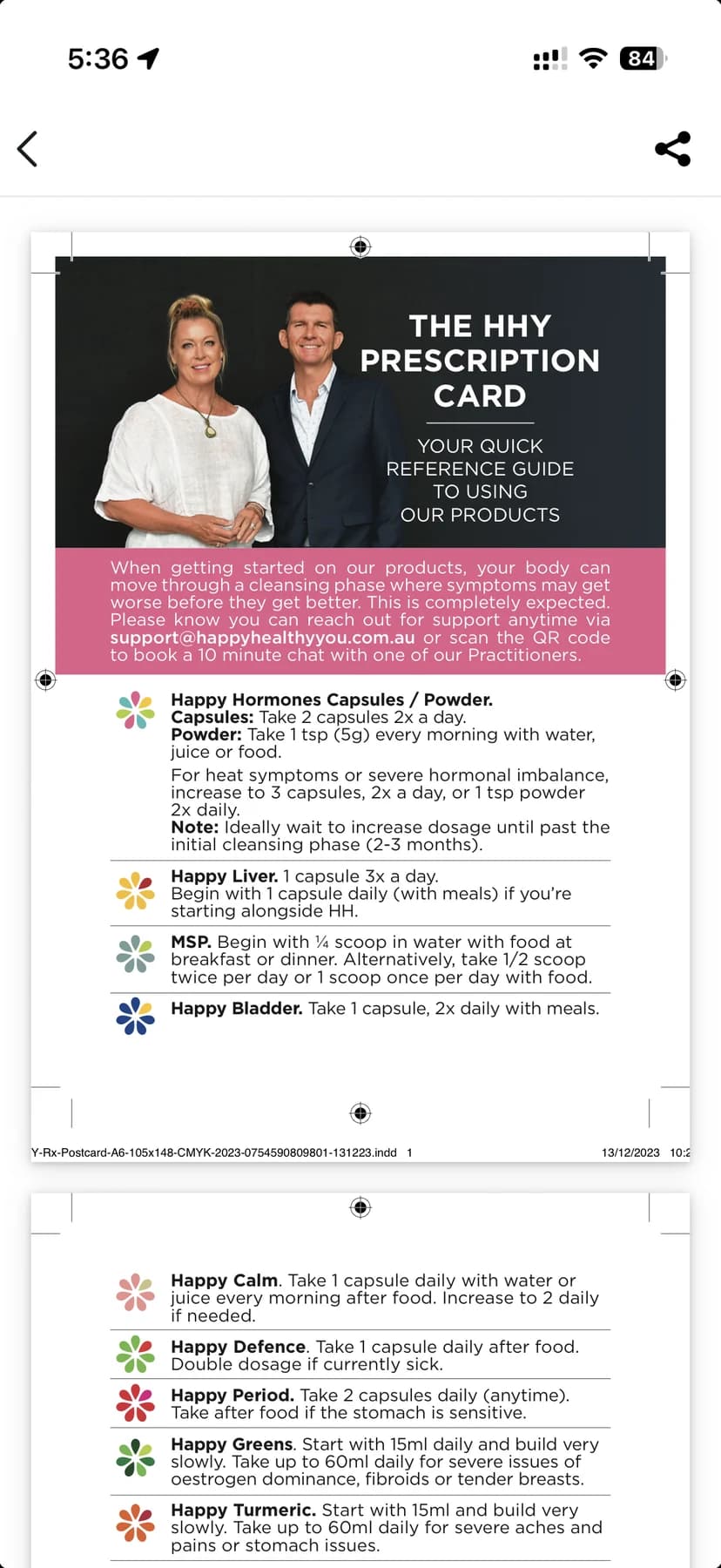
Their own product reference card sits in there too, so what a customer would otherwise hunt for on a printout is in the same app as the products.
A Naturopath, and Shopping by Concern
An in-app check-in, concern-led browsing, and subscriptions customers run.
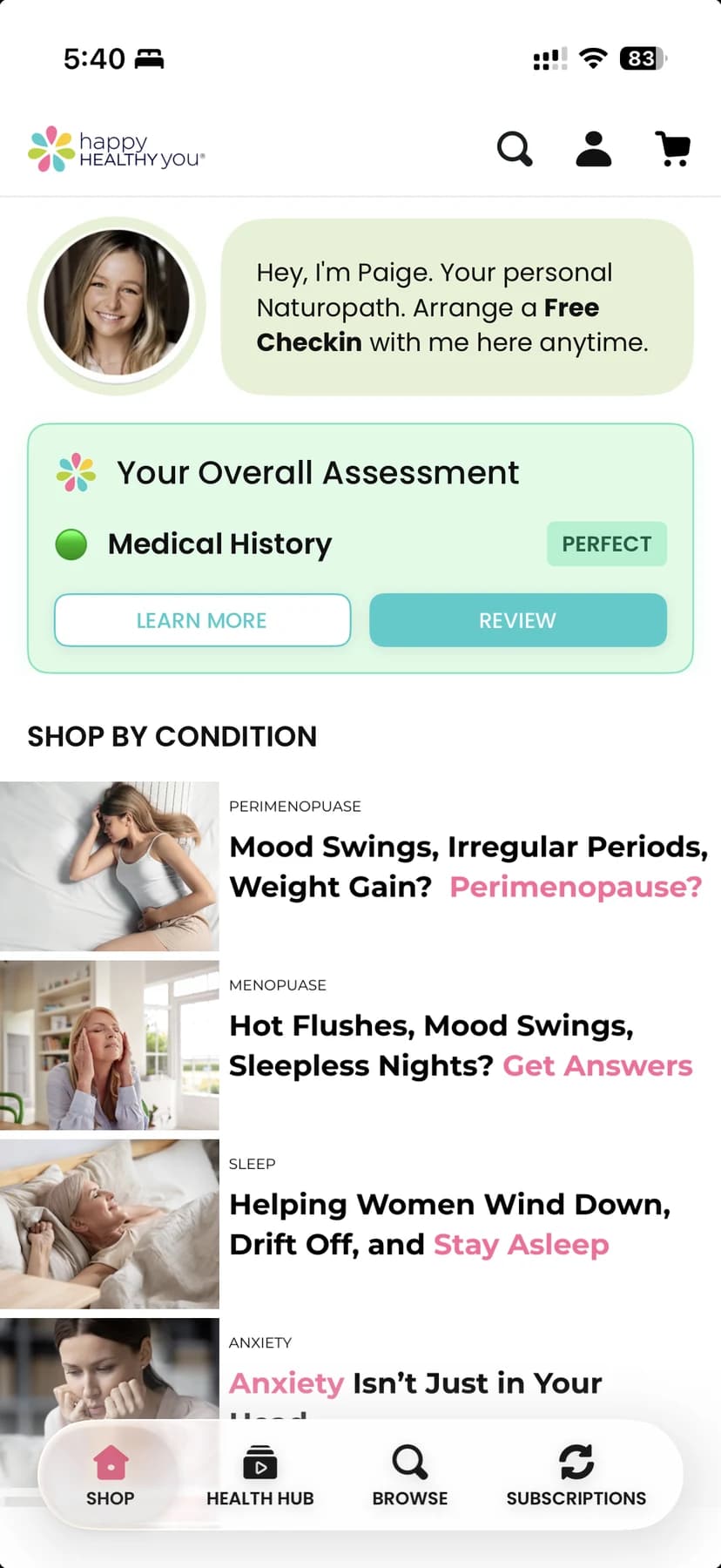
Customers can arrange a check-in with a naturopath from the app, and browse by the concern they arrived with rather than by product category.
Subscriptions are customer-managed rather than a support thread, and targeted push carries products, education and subscription updates.
The Outcome
Happy Healthy You ships on the App Store and Google Play, with the assessment, the report, the programme and subscription controls in one place. The mobile channel added revenue rather than moving it off the web storefront.
- Mobile
- Native app launched
- iOS + Android
- Both platforms shipped
- Guided
- Assessment recommends and sells in place
What does your quiz hand back at the end?
Bring the questions you already ask and the range you already sell. We will start with the gap between the two.