Verticals
Sports nutrition is a different question
 Neha3 min read
Separate product-format questions from evidence requests and customer-owned training logs. Each needs its own source and an honest limit.
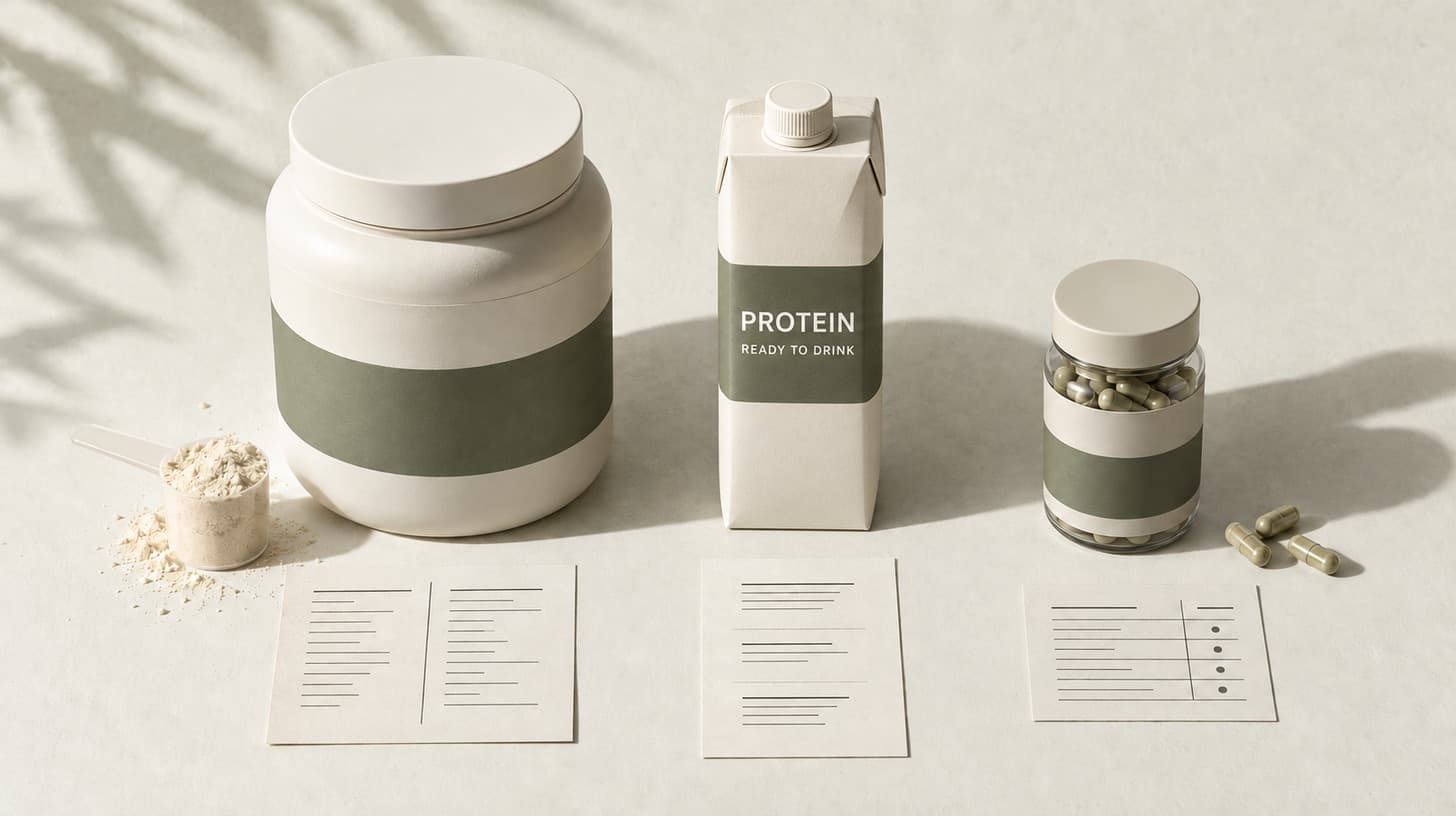
A shopper comparing powder with a ready-to-drink product needs a clear format record. Someone asking about third-party testing needs evidence for that claim. Someone returning to a training program needs their own saved activity.
Those are different jobs. Combining them into one persuasive product story makes it harder to see which facts come from the catalog, which need verification and which belong to the customer.
What the research observed
5W AI Communications’ Sports Nutrition & Protein AI Visibility Index 2026 used 60+ prompts total across six categories, five platforms and five runs per prompt per platform in Q2 2026. Its reported brand patterns varied between powder, ready-to-drink and qualified questions.
This is an agency-authored observation, not an experiment proving that a catalog change causes recommendation gains.
Source: 5W AI Communications: Sports Nutrition & Protein AI Visibility Index 2026
Make the format explicit
Powder, capsules and ready-to-drink products need accurate format and pack information. A variant selector can expose those differences clearly; separate pages can also work. The review is whether a customer can identify the selected product and read the facts that belong to it.
Do not assume that a merchandising structure determines AI inclusion. Start with the record itself: does the selected format agree with the product name, pack details and visible page? Keep another format’s facts out of the answer.
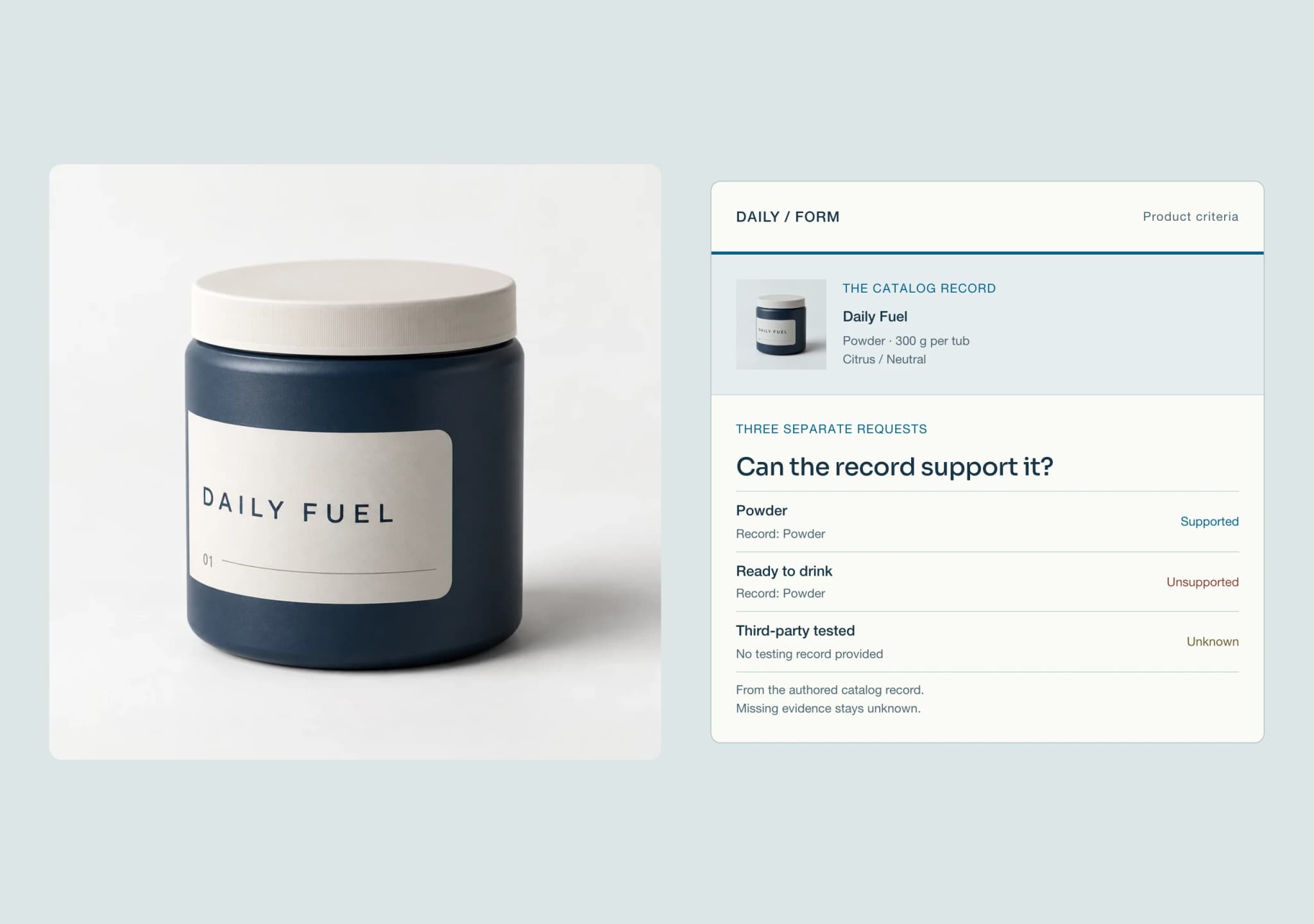
The Qualifier makes this concrete with one authored DAILY / FORM product. Daily Fuel is declared as Powder, 300 g per tub, with Citrus and Neutral flavors. It supports those criteria and conflicts with a ready-to-drink request. The result is about the displayed record, not a platform’s recommendation rules.
Keep testing evidence distinct
“Third-party tested” asks for something the format field cannot establish. In The Qualifier, the powder format is supported while testing evidence remains unknown. The experience does not decide that the product is untested or invent a supporting certificate.
For a real product, establish the source, product scope and current status of a testing or certification claim before presenting it as supported. An ingredient amount, exclusion and certification are different attributes; one should not stand in for another.
These are record and evidence checks. They are not health advice or an assessment of whether a product belongs in someone’s training routine.
Let the customer own the activity
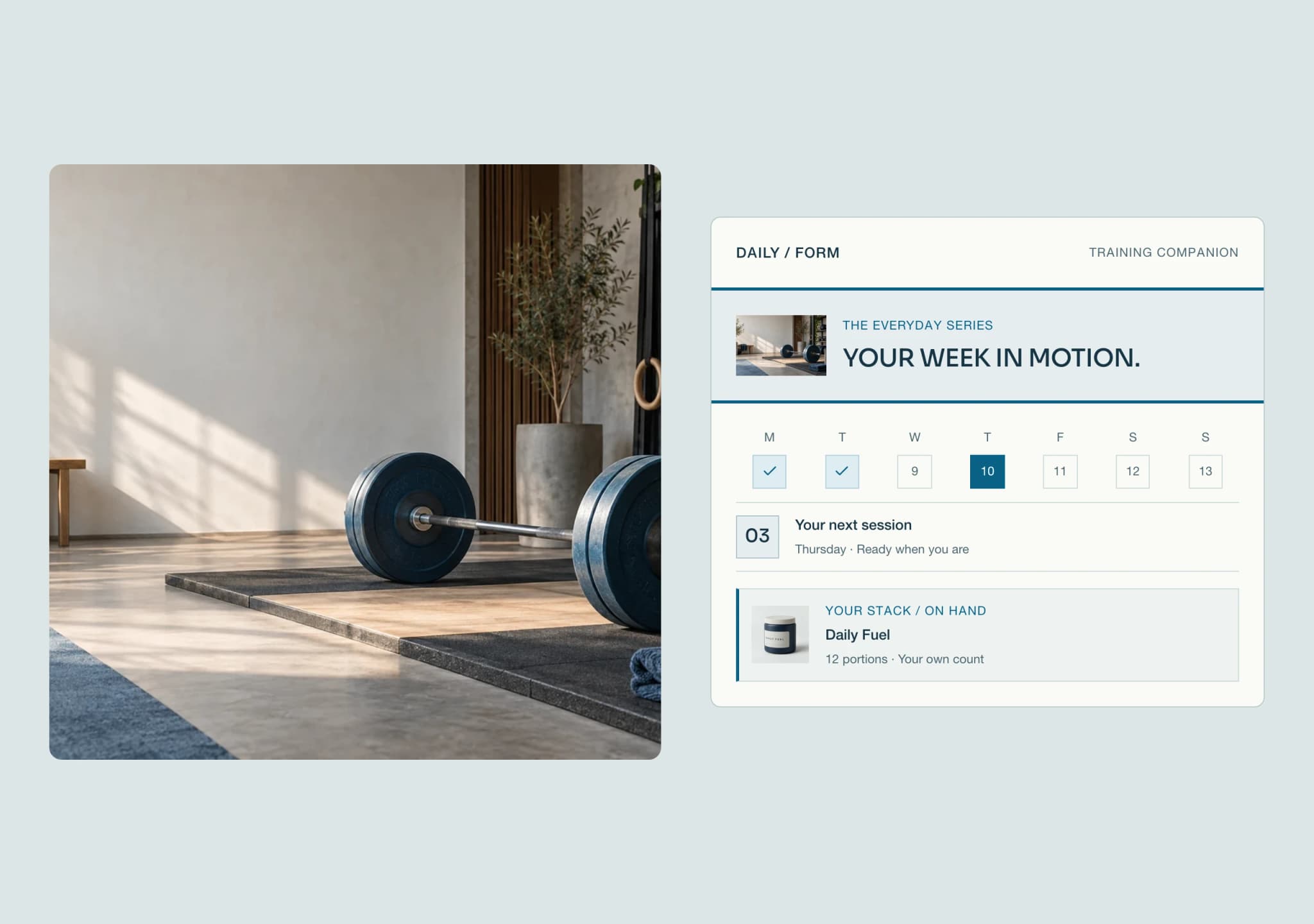
Training Companion explores another part of the relationship: a program to browse, a session to log and a saved supply quantity to review. The customer supplies the activity. A catalog attribute cannot tell the app that a session happened, and a completed session cannot prove a product was used.
Keep those inputs explicit. An inventory estimate based on a customer log is different from the number of servings printed on a pack. Neither should become an inferred dose, a recommendation to consume a product or a judgment about adherence.
A reorder should remain a choice. A useful review shows the customer what is saved and lets them change it before purchasing. A schedule or a logged session alone does not establish that an order is wanted.
Keep the three jobs connected
Start by checking format and pack facts at the point of product choice. Then identify the evidence behind any qualified claim. Finally, give returning customers control over the activity and supply information they choose to keep.
The Qualifier demonstrates the first two questions through declared local criteria. Training Companion explores the customer’s separate program and supply actions. Neither concept establishes a commercial result or a product’s effectiveness.
Measure a production change against the job it is meant to improve. A clearer product comparison, a completed session log and a confirmed reorder are separate outcomes. Treating them separately makes the next design decision easier to justify.
What would this look like for your brand?
Talk directly with a founder about one customer journey, the systems behind it and a focused prototype using your approved products and content.