Verticals
Why every pet brand should be building a mobile app right now
 Neha4 min read
Pet supplies have a 72% repeat-purchase rate - the highest in DTC. A native app with auto-delivery and biometric reorder captures that LTV before Chewy does.
The Repeat Purchase Advantage
Pet supplies have a 72% repeat-purchase rate. The ecommerce average is 28.5%. No other vertical comes close.
If you sell dog food, cat litter, flea treatments, or pet supplements, your customers are coming back. They have to. Their pets eat every day, need medication on schedule, and go through litter at a predictable rate. The question is whether they come back to you or open the Chewy app because it was easier.
The US online pet supplies market hit $28.8 billion in 2026. Subscription models have reshaped this category more than any other consumer vertical. An owner who sets up auto-delivery on kibble and litter is significantly harder to lose than one who repurchases manually each month. But capturing that subscription requires removing every possible friction point between the thought “I need to reorder” and the action “done.”
Why Mobile Web Falls Short
A pet owner realizes they’re low on dog food. On mobile web, that means opening Safari, navigating to your site, waiting for it to load, logging in (if they remember the password), finding the product they bought last time, adding it to cart, entering payment information or finding a saved card, and completing checkout.
That is seven steps between intent and purchase. Every step is an opportunity to lose them. Maybe the site loads slowly on cellular. Maybe they forgot their password and the reset email takes two minutes. Maybe they get distracted by a text message and never come back to the browser tab.
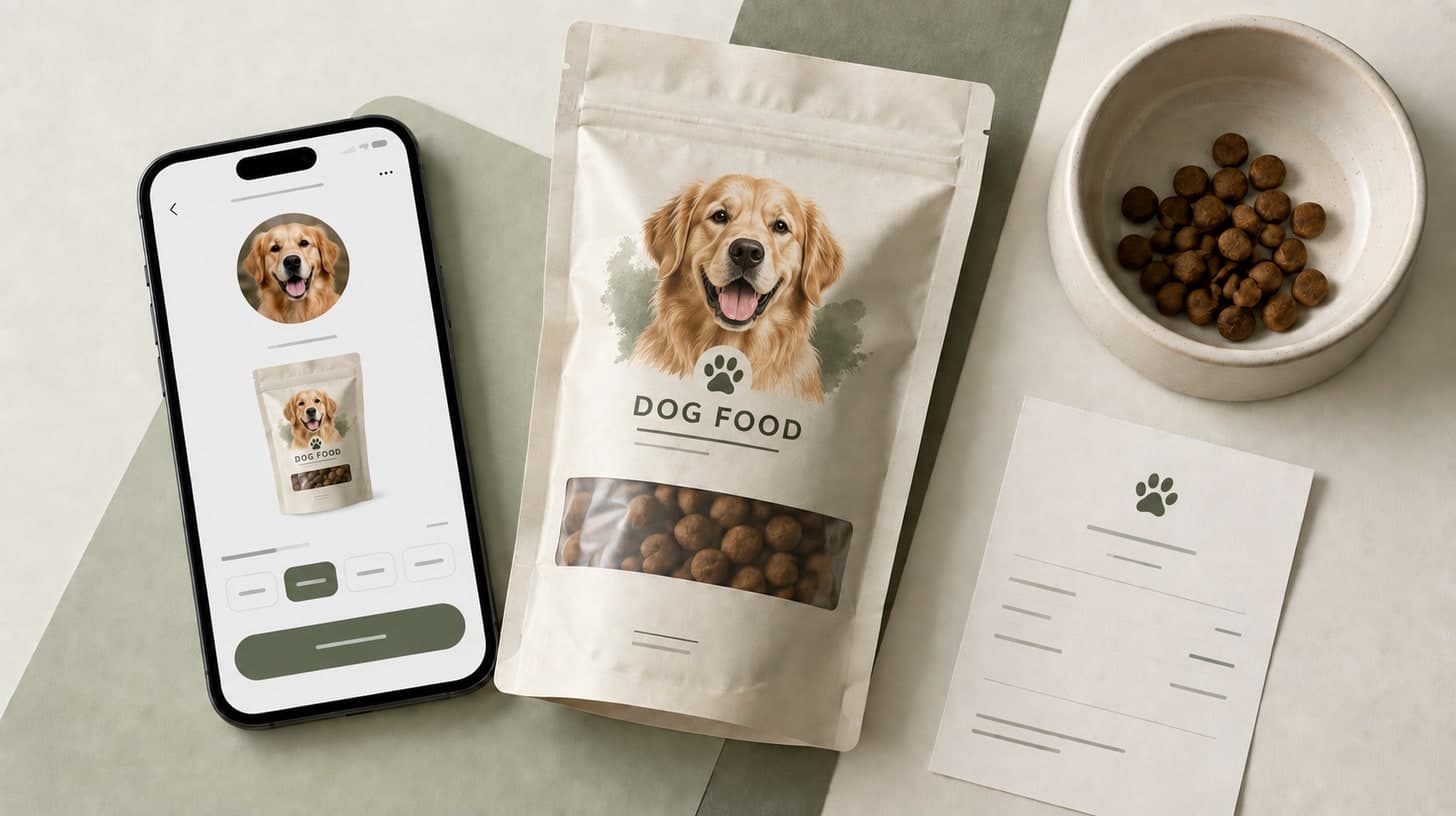
On a native app, the same reorder takes two taps. Open the app with Face ID. Tap “Reorder” on their last purchase. The payment method is already saved. The shipping address is already set. Done.
The difference between seven steps and two steps is the difference between a customer who stays and a customer who downloads Chewy next time because it was easier.
Three Features That Drive Retention
Most of the retention lift from a native app comes from three specific features, and none of them are complicated.
Push notifications are the first. Not promotional blasts about your summer sale. Replenishment reminders timed to when the customer actually needs to reorder, based on their purchase history and the typical consumption rate of the product they bought. A notification that says “Your 30lb bag of kibble usually lasts about 25 days. Want to reorder?” converts at a dramatically higher rate than a generic marketing email because it arrives at the moment of actual need.
Biometric login is the second. Face ID or fingerprint authentication means the customer never types a password. The app opens instantly, already authenticated. This sounds minor, but password friction is one of the top reasons mobile web checkout gets abandoned. Removing it entirely changes the reorder calculus.
Saved payment methods are the third. A credit card stored securely in the app means checkout is a confirmation tap, not a data entry form. Combined with biometric login, this turns a multi-minute process into a five-second interaction.
The Subscription Lock-In Effect
Subscription models have reshaped pet supplies more than any other consumer category. Once a pet owner sets up auto-delivery, their switching cost increases dramatically. They’ve already configured their delivery cadence, their product preferences, and their payment method. Moving to a competitor means re-entering all of that information and risking a gap in delivery.
A native app makes this lock-in even stronger. The app itself becomes a habit. The customer opens it, sees their upcoming delivery, maybe adds a treat or a new toy to the next shipment, and closes it. That interaction takes thirty seconds and reinforces the relationship every time it happens. A mobile website visit, by contrast, feels like starting from scratch.
Annual subscriptions in pet supplies retain 28% of customers after one year. Monthly subscriptions retain 11%. The difference is friction. Annual commits remove the monthly decision point. A native app with auto-delivery does something similar by removing the friction from each individual reorder.
When to Build
A native app makes sense when repeat purchases are already most of your order volume and the reorder itself is the friction. Below that, the development cost is hard to justify, because the app has nothing to make easier yet. Above it, every month without one is retention left on the table.
The math is straightforward. If your average customer orders six times a year at $45 per order, that customer is worth $270 annually. If a native app increases your repeat-purchase rate by even 15 percentage points, and you have 2,000 active customers, the annual revenue impact is meaningful enough to cover the app build cost within the first year.
Pet brands that wait for “someday” to build their app are giving Chewy, Amazon Subscribe and Save, and every other platform with a frictionless reorder experience time to capture their most valuable customers. The retention window is open now. It closes a little more every month a competitor’s app is easier to use than your mobile website.
If your customers are already buying from you repeatedly, the only question is how much friction stands between their intent and their next purchase. A native app removes most of it.
What would this look like for your brand?
Talk directly with a founder about one customer journey, the systems behind it and a focused prototype using your approved products and content.